


Pritzker’s Opportunity to Help Children and Send the CTU a Message
By Paul Vallas
June 3rd, 2026
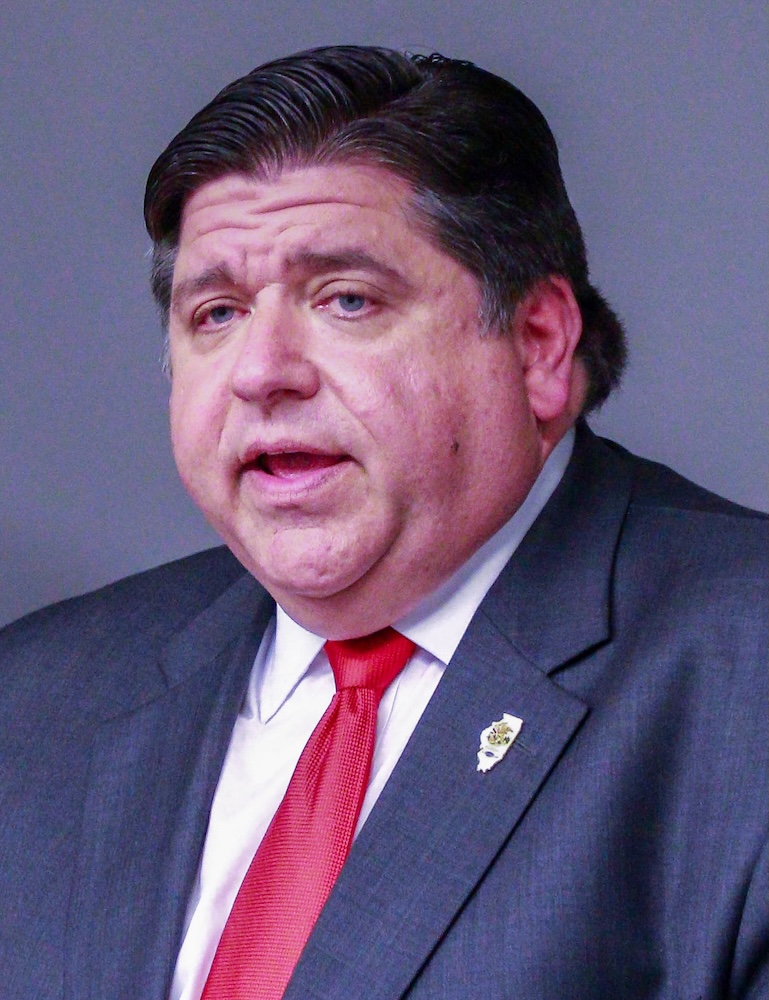
With Mayor Brandon Johnson now joining Chicago Teachers Union President Stacy Davis‑Gates and Vice President Jackson Potter in attacking Gov. J.B. Pritzker — calling him an “out‑of‑touch billionaire” and worse — will he have the courage to opt Illinois into the federal Tax Credit Scholarship Program that they oppose? That would be payback: sign on to a program the union vehemently opposes which would provide low‑ and middle‑income families with real money to improve their children’s education.
Davis‑Gates has been a relentless critic. During Pritzker’s vetting for a possible vice‑presidential pick, she questioned his commitment to public‑school children — particularly Black children — saying he was “continuing the tradition of denying funding for Black, brown, working‑class and immigrant kids in Illinois’ largest school district.”
Jackson Potter has repeatedly accused the governor’s administration of protecting billionaires and offering large corporate tax breaks while classrooms go wanting. Mayor Johnson has joined those critiques and added a personal swipe: he said the billionaire governor “doesn’t know what it’s like to open a refrigerator and, ain’t no food in it.
CTU leadership’s demands center on securing the funding to cover the union’s new contract; they have sought roughly $1.6 billion in additional state aid for Chicago Public Schools. The governor rejected that demand, saying the state cannot responsibly rewrite the school‑aid formula to cover such a massive recurring increase without adding almost $7 billion to the formula overall.
Pritzker and others note that CPS received about $2.8 billion in one‑time federal COVID relief (ESSER) and that much of those funds were used to hire over 9,000 full‑time positions while enrollment fell between 45,000 and 70,000 since 2019, depending on which metrics you use — an 11 percent decline from pre‑pandemic levels. Critics argue that committing one‑time federal dollars to ongoing personnel costs worsened the district’s structural budget pressures.
On school spending, Illinois ranks among higher‑spending Midwestern states. Depending on the measure used, Illinois moved from roughly 18th to somewhere between 8th and 11th in per‑pupil spending in recent years, and statewide per‑pupil spending can exceed neighboring states by a wide margin in percentage terms. Chicago Public Schools now registers among the highest per‑pupil spending levels of large urban districts — CPS’s reported total per‑pupil spending is over $32,000, with a 44 percent increase in per‑pupil funding since 2019.
Governor Pritzker has reason to feel frustrated, if not betrayed. He has repeatedly supported legislative actions that strengthened the CTU’s position in Chicago education policy. Those actions included the following:
– Restoring the CTU’s bargaining rights — in 2021 most importantly their ability to strike for any reason.
– Delaying the move to a fully elected school board, which gave the mayor and allied interests time to consolidate influence while Mayor Johnson was in office.
– Eliminating the independent State Charter Commission, which authorized, abdicated for, and protected public charter schools.
– Enacting the charter neutrality law that not only opened the door but promoted the CTU’s unionization of charter school teachers and staff.
– Not attempting to prevent the expiration of the Invest in Kids scholarship program that he claimed he supported — a program that served more than 9,000 mostly low‑income children.
Pritzker is responsible for dramatically strengthening the CTU’s monopoly over education in Chicago while strengthening the union’s ability to hold the school district and elected officials hostage to its demands. The city’s caving to CTU school‑closing demands, which kept school campuses closed for 78 consecutive weeks with devastating consequences, was a demonstration of the destructive consequences of the union’s empowerment by Pritzker.
If the governor wants to send a message to the CTU and to his hand‑picked mayor — and to actually help families — he should opt Illinois into the federal Tax Credit Scholarship Program. That program offers a federal tax credit of up to $1,700 annually for contributions to accredited Scholarship Granting Organizations (SGOs), which then make private grants to public, private, and homeschooling families for K–12 education supports. A recent Illinois Policy Institute survey showed over 63 percent support for participating.
Financial support includes not only tuition assistance but also support for tutoring, early childhood programs, therapies, textbooks, internet access, technology, and more. Nonpartisan estimates suggest as much as $900 million could be available for families in Illinois alone. Former U.S. Education Secretary Arne Duncan called the federal education scholarship tax credit a “no‑brainer” and a “moral obligation” to help the students furthest behind.
Critics claim such programs funnel public dollars into private schools or support discriminatory institutions. Supporters respond that the legislation — and likely state implementing rules — can and would allow states to set eligibility requirements for participating schools and to require non‑discrimination and transparency. That technical detail matters: states can design guardrails so scholarship dollars meet oversight standards similar to those for other education programs.
If Illinois declines to participate, Illinois taxpayers who claim the federal tax credit on their returns would likely direct donations to SGOs in participating states. In that outcome, Illinois families would lose out while their neighbors benefited. If the governor wants to shift the balance of power and give families more options — not less — he can act now. Duncan and other prominent Democrats have urged Democratic leaders to reconsider opposition and embrace the program as a supplement to traditional public education.
Let’s be blunt: CTU leadership, like other powerful teacher unions nationally, opposes choice programs even when those programs would put dollars directly into the hands of low‑income families who remain in public schools or use funds for supplemental supports. If Gov. Pritzker wants to show he is serious about helping the neediest children and willing to stand up to his union allies when policy — not politics — demands it, opting into the federal tax‑credit scholarship program would be direct, consequential, and politically bold.
-30-
 Paul Vallas formerly ran the public school systems in Chicago, Philadelphia and the Louisiana Recovery School District. He was a candidate for Mayor of Chicago.
Comments 19
Thanks, Paul Vallas, for actually caring about those kids. Please run for mayor!
And make sure you hire good political consultants! Maybe even from outside of Illinois to help you reach the people.
If there’s any organization that needs defunding, it’s the corrupt CTU.
Thank goodness the Illinois State Board of Education is doing something to improve our Children’s educational results!!
They’ve lowered the standards!
Reading Mr. Vallas’ proposals on JKN for Chicago governance, crime control and education policies that are workable and reasonable is always — well, actually, it’s disturbing. Because among all Chicago political figures, he’s the voice in the wilderness of a city being run by a teachers union and its joke mayor. They don’t care about workable and reasonable, only for stuffing connected pockets with every taxpayer dollar they demand.
Vallas offers an alternative to policies driven by a teaching institution that’s ineffective at teaching and a criminal institution that’s effective at criminal advocacy. Chicago can choose the Vallas alternative or keep descending into another American big-city single-party dystopia. Good luck to my old home town.
I 100% agree but, unfortunately, IL/Crook/Chicago hyperpartisanship will never allow it. Get out while you can…
Clear and drama free solutions (and non partisan..) to complex issues. You would have made a great mayor Paul.
Paul,
I too fear your voice is a cry in the wilderness. I have zero expectations that anything will change in my shortened lifetime in this state or city of Chicago. Leftists are firmly in control of every facet of political “choice!” The only thing that would open voters’ eyes would be an expose of how the world’s socialist countries control the lives of their victims (not citizens, victims!) And of course, the big shots at the top continue to get fat, like our gov Dumbo, as they squash any form of criticism with the help of their own “media” better known as mouthpieces, as we have in this country. God help us….
As an outsider living in Indiana, also as a Republican, I hope that Paul Vallas runs for Mayor of Chicago. Hopefully against Mayor Nitwit. He’d be the first mayor with any common sense since when? The voters need to recognize this and not make the same mistake as last time. As for Governor Silver Spoon, does he really even have the brains to ever do what’s right? Voters of Chicago and Illinois need to wake up and vote these incompetents out of office. Pritzker for president? Please!!!
This guy could not care less about Chicago school children. The present grades are lost to ignorance and will never know or remember Gov. Pugsley when they are old enough to vote. That disqualifies them from getting any help.
The other problem is money…the city, county and state are all broke….hoping and praying for the Bears to stay in Illinois….they can’t pay for anything new without stealing it (democrats are good at it) from some other presently-funded source.
Vallas would make a great mayor but is too moderate for this blue sanctuary cesspool so the unions will never admit him.
Pardon my cynicism, but I have little doubt that Gov. Commodius Maximus will blow the opportunity.
So sad YOU are not the mayor! What a different situation we would be in —— a MUCH better one.
Sad what Chgo has become and sad how the students are never put first.
I agree that Paul Vallas would have made a fine mayor; quite possibly a great mayor. Even now, all these years later, after being on the local sidelines for numerous years, he knows more and commands far more analytical skills than our ruling pols can only dream about.
Nonetheless I have to ask, hasn’t that horse left the barn? Isn’t it better not to split the vote going to rational, forward thinking candidates 2 or 3 or 4 ways while the CTDU and its minions trot out its legions of blind voters to reelect its puppet?
Agree 100%!
A Vallas candidacy plays into the hands of the CTU. It certainly was a major factor in the last mayoral election. I appreciate Mr. Vallas’ qualifications and passion but he would serve Chicago better by throwing his support behind the best qualified minority candidate!
Had he done this in the last election Mayor Boufos would be in the rear view, a forgotten failure…
Aligning with another candidate Mr. Vallas could serve at a leadership position in the city; Deputy mayor or “rebuild Chicago czar” comes to mind.
Slightly off topic here…but here goes..I escaped the plantation seven years ago to a suburb of Houston. Great move! The media and city here are abuzz from the arrival in a week of the World Cup. Constant stories about hotels being filled, restaurants preparing for massive business. It is expected to generate at least a billion dollars into the local economy. A true world wide event on the world stage. Do you know who’s not excited? CHICAGO. Never considered, never in the running for such a massive event. I’m sure the reason is THE RAMPANT CRIME. No one wants to send their people to be robbed and killed. Oh well, Chicago still has its garbage pail drummers.
Not “rampant crime”, it was purely a financial decision, made by the previous administration.
“Chicago is not hosting the 2026 World Cup because the city voluntarily withdrew its bid in 2018. City officials, led by former Mayor Rahm Emanuel, concluded that FIFA’s financial demands and inflexibility carried too much risk and would have left local taxpayers with potentially massive, unpredictable costs.”
You can lead a donkey to water, but you can’t force him to drink.
And here I thought Illinois was all in on ‘free stuff’.
Maybe we just need to put those tax credits on a table behind a plate glass window on The Mag Mile.
I will say that those SGOs – governed by state-specific rules – sound like a relabeling of the homeless/illegal immigrant industry NGO complex.
Abuse alert!!!
$32,000 a year per student; a 44% increase since 2019.
I believe that more than we pay hear in Lake Forest.
And our kids can read and write.
Finally, nothing will be done bcuz the union is all powerful. Only when the financial system totally collapses will anything be done. We all will be dead by then.
PS I have relatives that are or were CPS teachers. They hate Mr. Vallas with a passion. They foam at the mouth with diatribes against him. Vallas will not win if union has any say. And they do.
Sorry Paul, If the people of Chicago really cared, they would have voted. How many of the 30% that did are employed by the CPS and CTU?