


AI can make it hard to separate truth from fiction. Here’s how to tell the difference.
By Greg Ganske
May 17, 2024
It’s incumbent on citizens to be skeptical about what they see, read and hear on the internet or anywhere. Another danger, though, is to move beyond skepticism to cynicism.
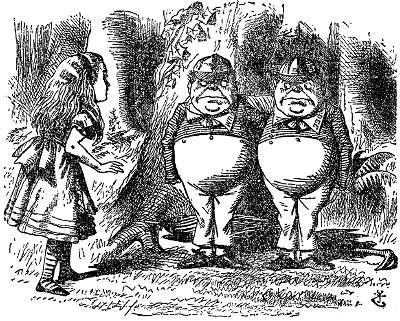
How are we going to tell what is real or fake? Alice in Wonderland said, “If I had a world of my own, everything would be nonsense. Nothing would be what it is because everything would be what it isn’t.”
It can be very hard to discern fact from fake. I recently read an article that purported that Centers for Disease Control and Prevention statistics show a gigantic increase in cancers associated with COVID-19 vaccination. The article was allegedly authored by a physician, and its use of CDC statistics was dense and convoluted.
To a lay person, though, it would appear to have facts backing it up. The headline was designed to grab your attention, and to ensure more clicks for advertising.
I was skeptical because news this important should have been everywhere, especially medical journals. So, I dug into the source of the article and found it originated on an anti-vaccine conspiracy site. There is no mention of a link between the COVID-19 vaccines and a surge in cancer cases anywhere on the CDC website. The American Cancer Society and the National Cancer Institute statistics also show no cancer spike related to COVID-19 vaccines, or any other cause.
Website viral disinformation is nothing new. For many years after I served in Congress, I was asked by friends about the truth of a false viral post alleging that congressmen receive lavish pensions for life after only one term in Congress and are not required to contribute to Social Security.
As if trying to figure out what is real and fake weren’t already hard enough, the advent of Artificial Intelligence, or AI, is making it difficult to not question our own ears and eyes. The emergence of AI voice cloning technology has brought back the “grandparents” scam. Scammers access AI voice cloning technology and need only a few seconds of a person’s voice over the phone or from a video on social media to create a realistic simulation of it.
The scammers then pretend to be a grandchild and claim to need wired money, saying they were in an accident and need money for the tow truck, or maybe they are in trouble with the law and need wired money to get out of jail. It is getting to the point that people will have to use code words to affirm who is really calling or maybe ask some personal question that only the real person would know.
My friend Sen. Lindsey Graham reported to the FBI recently that someone attempted to trick him into thinking he was communicating with Senate Majority Leader Charles Schumer. Graham revealed this as he was talking to top tech and government officials meeting in Washington to discuss AI security.
For better health outcomes, we need to connect more Iowa doctors with patients’ data.
A high school athletic director in the Baltimore area was recently arrested after, authorities allege, he used AI to make a racist and antisemitic audio clip impersonating the school’s principal. The clip was posted on Instagram, went viral, and before the truth could come out the school principal was inundated with threats.
The scamming and criminal deceptions extend to what we see; no longer can we just trust our own eyes. Schools across the country have been scrambling to contain deepfake videos that male students make using AI “nudification” apps to create fake naked images of female classmates, some of them as young as 12.
False information threatens the integrity of election campaigns
The implications for political campaign fraud is obvious. Even experts can have trouble telling if voice or photos and videos have been computer created or altered, while to most us they sound and look real. What if they are disseminated by targeted internet posts just before an election before they are exposed as fake? What if a foreign nation hacks social media sites to throw an election, or at a minimum make people question an election’s results?
Internet news sites and social media posts of written material can similarly create other significant disinformation, especially when about one-third of the younger generation get their news from platforms such as TikTok, which carries the risk of communist Chinese disinformation. Stanford University Graduate School of Education says even digital-savvy students can be easily duped and frequently don’t recognize political bias. Research by GSE shows that instruction can help these students better discern fact from fiction.
Is all well as I age? The doctor says yes, and more importantly, so does feline Luna.
It is important to note the difference between stories that are fabrications and others that have some truth but aren’t 100% accurate. We also should not call accurate stories “fake news” just because we don’t agree with them or find them uncomfortable. Be aware of your own confirmation bias — we all have a subconscious tendency to seek and interpret information in ways that affirm our beliefs.
We should note what is supposed to be straight news versus opinionated pieces. Some sources may actually be satire, such as posts from The Daily Mash, The Onion, and the Babylon Bee, which can superficially look plausible.
Does the item pass the “smell test”? Is it so outrageous that your gut says it can’t be? Maybe by being outrageous it confirms your worst suspicions or wishes. An easy way to start researching the truth is to go to one of the fact-checking sites. Studies show fact checkers themselves aren’t gospel, either. They have their own bias: CNN, NPR, Snopes, Politifact, and the Washington Post lean left; BBC, Reuters, and FactCheck.org tend to be center; National Review leans right.
Social media platforms allow anyone to share stories. The problem is that most people don’t check the source of the story. It is hard to identify the original source of the news.
How to not spread fake news
The best way to limit fake news is to not spread it. Here are some tips:
- Develop a critical mindset.Napoleon once said, “Skepticism is a virtue in history as well as in philosophy.” If you see a suspicious post like the one cited at the beginning of this piece, be skeptical and check the original source. Get into the habit of fact checking before spreading it. See who else is reporting the story. The mainstream media may put a slant on stories, but don’t jump to the conclusion that all mainstream media is fake.
- Those outlets do have editorial guidelines and networks of reporters who are trained to get opposing views on the information in their stories.
- Find out if a source is reliable by asking some questions.“About us” pages are easy to fake. Make sure you know the source really exists; find out if the story really came from them. Are they trustworthy? What is their track record? For specialized sources, find out if they are experts on that topic. Pay attention to the domain and the URL. Sites with endings like “co” should tip you off. Some imitate real sites with realistic looking logos very similar to the real site.
- Check the facts and quotes from the experts in the story and beware of statistics.The old saying goes, “There are three kinds of lies: lies, damned lies, and statistics.” Statistics can be manipulated to bolster both sides of an argument if taken out of context. We need to view them as neither unquestionable truths nor elite conspiracies. As a former congressman, I attest that in order to make wise public decisions we need statistics but must check them out.
Checking on sites that don’t agree with your politics may help you discover stories that are wrong. At least you will know what others are reading. Real Clear Politics often lists articles with opposite views one after another.
Modern editing software makes it easy to create fake images that look real. If you are a real sleuth, you can use tools such as Google Reverse Image Search to check where an image originated and if it has been altered. You can do this by right clicking on the image and choosing to search Google for it.
Government regulation is not the answer
In April 2022 the Department of Homeland Security set up the Disinformation Governance Board to protect national security by disseminating guidance to DHS agencies on combating disinformation that threatened national security. A big public backlash over First Amendment issues led to it being dropped. The American people have been historically very suspicious of government attempts to regulate their speech.
The Privacy Act of 1974 was passed over public concern of the abuse of government surveillance following Watergate. Similarly, Americans were outraged in 2013 when they found out that the National Security Agency was engaging in bulk collection of cellphone data, and President Barack Obama ordered the program shut down.
Without a government watchdog, it becomes even more incumbent of citizens to be skeptical about what they see, read and hear on the internet or anywhere. Another danger, though, is to move beyond skepticism to cynicism.
To return to Alice in Wonderland, Tweedledee continued, “Contrariwise, if it was so, it might be; and if it were so, it would be; but as it isn’t, it ain’t. That’s logic.”
Editors note: This column is published with the permission of The Des Moines Register
-30-
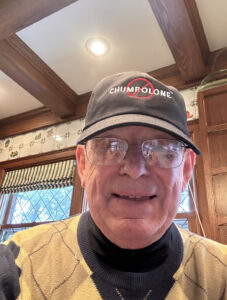 Dr. Greg Ganske is a retired member of Congress and a retired plastic surgeon who cared for women with breast cancer, children with cleft lips, farmers with hand injuries and burn patients. He served Iowa in the U.S. Congress from 1995 to 2003. He is a retired lieutenant colonel who served in the US Army Reserve Medical Corps.
Comments 11
Is it possible that all those fabrications President Biden keeps repeating could be AI produced?
David- it could be plausible that Biden himself is AI produced.
Great article Dr.Ganske. Reminds me of the documentary I saw a few years ago called “ The Social Dilemma “.
Hmmmm… FJB as a Max Headroom-style AI?
Well, it *would* explain the stutter…
Forget AI – your “friend” Lindsay Graham is a war monger who has recently sent billions to a corrupt country – talk about deception
Sage advice – be skeptical and validate what you see on the internet & elsewhere. There is so much bs in the internet cesspool you have to be skeptical of it all. Elections are determined by whipping up the populace into a frenzy with fear, anger, etc. Being a responsible, skeptical citizen and validating what you see prior to acting is how we continue to earn a thriving democracy. It’s not easy, but nothing worthwhile is.
Very well written. We are awash with fake news, i.e. 2020 election stolen; lies, ie Jan 6th was peaceful, etc. There is no ‘neutral’ news anymore. We are in an age of infotainment because IT SELLS THINGS, IE MAKES MONEY. A recent publishing company shut down over a dozen scientific journals because of falsely written conclusions in their articles. See WSJ last week. Remember that wine is good for for your health? Total BS! NO ALCOHOL IS GOOD FOR YOU. But the alcohol industry paid millions to govt to push that ‘theory’. I always thought it was bad for one based on science of digestion of ALCOHOL: the breakdown products are seriously carcinogenic! Instead of drinking wine: EAT THE DAMN GRAPES BY THEMSELVES FOR YOUR PHYTONUTRIENTS. What killed Bogart, Ann Sheridan, Errol Flynn, (i’m showing my age), Amy Winehouse, etc at an early age? Alcohol and cigarettes. The same with pot: THERE ARE NO BENEFITS AT ALL, JUST RISK. PURE AND SIMPLE.
If I’m reading a daily newspaper I always look at the source. If the article was initially posted by the New York Times, Washington Post, LA Times or the Associated Press you know the facts will be slanted or omitted. Cmon now! If you leave out the facts is it really lying? Seeing how the Chicago Fibune has been turned over to Northwestern School of Journalism “activist reporters” like the great Meghan Crapeau you definitely know what you’re reading is swill. The Chicago Slum Times? Fuhgeddaboutit. You’re starting in the minus box. One of today’s nuggets mentions the Dexter Reed shooting by pointing out CPD let 96 shots go at poor Dex. It didn’t mention that Dastardly Dex shot a police officer first. Oh well, never let the facts get in the way of a good spin. Me? Since I retired I look at this stuff for my own amusement. Ya gotta keep yourself entertained….
Yes! A lot of great points! Love “Chicago Fibune”
Great column that needs to be shared with… EVERYONE.
AI is going to only improve over time, and the implications for common citizens will be disastrous. Look at how the IRS was used against conservatives under Obama. If they had AI, all sorts of fake stories about us with pictures to back up claims would have put many behind bars. Very scary stuff.
AI can be useful or dangerous, like many other technologies! Congress does need to address the issues associated with it, but over-regulation isn’t the answer. Pat, you are correct about maintaining a healthy skepticism about what you read or see or hear on-line, just as we should with any “news” outlets. But cynicism is very dangerous, as it can blind us to truth as easily as AI manipulation. Knowing the truth is critical to how we stay free, but sorting out truth amidst all the manipulative and targeted messaging in the media is hard work, and many don’t want to do that work and instead frequently rely often on certain media outlets and enable their possible manipulation.