


Sports Are Too Important to Be Ruined by Betting
By Greg Ganske
April 5th, 2026
Sports are much more important than just football entertainment on a fall afternoon, the World Series, Superbowl, or March Madness. All aspects of sports are threatened by the existential threat of betting and gambling in sports. The possibility of cheating with increased financial corruption of sports hangs over it like a sword of Damocles.
On the individual level, sports are crucial for the mental, social, and physical development of young men and women. Sports strengthen the body and promote mental health, wellbeing and self-esteem. They help develop communication skills and teach individuals how to work toward shared goals. Sports teach discipline, resilience, leadership and how to balance school and personal life with training. There is a positive link between sports and higher GPAs and college attendance.
The lessons learned on the playing fields translate to later career success. In ancient times, Plato (originally Aristocles) was a skilled wrestler who competed in the Isthmian Games. His wrestling coach nicknamed him “Platon” which means “broad-shouldered.” Plato viewed sports as necessary for balancing the body and the mind and for cultivating courage, discipline and emotional control as well as physical strength. The Duke of Wellington famously said, “The battle of Waterloo was won on the playing fields of Eton.”
On a social level sports acts to foster community by bringing together people of different backgrounds. They unite people through shared passion and identity and provide a sense of belonging when rooting for a common team or athlete. Sports bridge divides in race, class, and culture. Nelson Mandela said, “Sport is more powerful than governments in breaking down racial barriers…it has the power to unite people in a way that little else does.”
In regions like Iowa without professional teams, college sports provide a vital community identity. College sports like basketball and football generate huge revenue from TV, tickets to games, and merchandise. These revenues help to support our universities. College scholarships cover high tuition costs and provide opportunities for elite training and academic support. Student-athletes learn to work in teams and develop relationships that benefit them in later life socially and in work.
Professional teams have deeply loyal fans that help people share a sense of community pride and local identity. The fans are entertained by the highest levels of skill and competition. The economic impact is enormous not just for the players and owners but for the surrounding businesses. The Super Bowl, for instance, typically brings between $300 million and $1 billion in gross economic impact to host cities and surrounding areas. The host cities get a significant boost in their tax revenue as well.
The upcoming 2026 FIFA World Cup is expected to generate over $30 billion in total economic output and add around $17 billion to U.S. GDP. This soccer tournament is projected to support about 200,000 jobs with 4.5 million fans attending. The 2026 winter Olympics brought about $6 billion to Italy. The 2026 summer Olympics will bring up to $18 billion to Southern California.
The benefits of sports hinge on its integrity. When the trust between athletes, fans and governing bodies collapses, fair and honest contests turn into doubted spectacles. When fans suspect match-fixing, doping, or corruption they lose faith in the validity of results. If cheating occurs, the competition becomes a sham. Viewers lose that “dopamine hit” of genuine anticipation and lose interest. This leads to declining viewership and decreased sports network contracts. The golden goose gets cooked because sponsors and investors often withdraw.
When youth and adults lose trust in the honesty of sports, they are less likely to participate in “us vs them” thinking and this leads to less community-oriented activity. When individuals think the system is rigged, they lose faith in the lessons of discipline, hard work, and fairness.
We’ve had examples of cheating in sport all our lives. Pete Rose was banned from baseball for betting on his own team. Rosie Ruiz did not run the whole course in the Boston Marathon. East Germans doped their athletes in the 1970s and 1980s. Lance Armstrong was stripped of seven Tour De France titles for the same. The NBA had betting scandals in 2002 and 2007.
Soccer scandals in 2005, 2006 and in 2025 led to Juventus being stripped of titles and demoted. Olympic boxing referees and judges were dismissed in 2012 when a boxer was knocked down 5 times and still won. This winter Olympics French skating judge Jezabel Beaudry was accused of giving lopsided scores that favored the French skaters and kept the American pair from winning a gold.
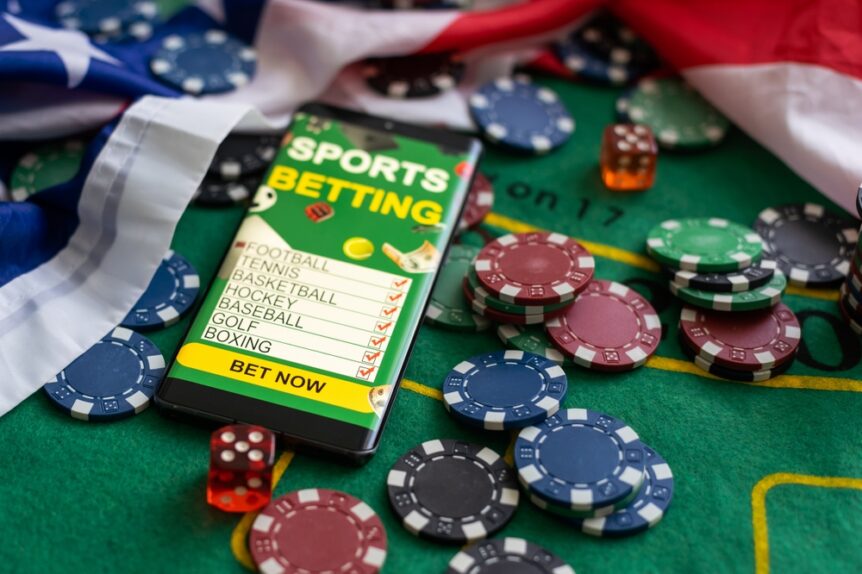
Why is the danger of cheating and corruption now so much more worrisome? Why are so many people now saying that they just don’t trust sports anymore? The answer is the explosion of gambling ensnaring the sports world that is catching so many young men in its web of bets, bankruptcy and mental illness issues.
Gambling is available on their cell phones continuously. The October 2025 FBI investigation of multiple individuals including NBA coach Chauncey Billups and player Terry Rozier exposed a sprawling illegal gambling and fraud scheme. Mafia associates used insider information to manipulate NBA bets. Over 30 individuals were charged.
Now every time an NBA player misses an easy shot, a baseball player throws a pitch into the dirt, or an NFL wide receiver drops an easy pass the fans wonder if someone got paid off. It isn’t just in major games. Point shaving may be easier and more prevalent in the mid-major games where the players aren’t making the big dollars on NIL and aren’t likely to play in the pros. They are told to just shave the points in the first half so that bets on the first half scores can be fixed but then told they can play a regular game the rest of the way. That way they can feel that they didn’t tank the whole game.
The future where everything—politics, sports and entertainment– is bet on is here. DraftKings and FanDuel are now competing with Kalshi and Polymarket which, under the banner of predictions markets, found a way to take bets on sports, indeed anything, even where betting is even banned. Iowa is involved in a suit with Kalshi about it evading state gambling laws.
Traditional casinos are bound by guardrails to limit addictions, but the online gambling industry is not. Gambling apps should at a minimum be regulated to require time limits and cooling off periods. Controls should be placed on youth gaming. Credit card bans or limits should be enacted. We should ban bets on individual player performance.
The real problem is that the leagues, networks and sports books try to convince the public that gambling is just another way to energize fans. A good bet would be that the number of scandals will increase dramatically, threatening the whole issue of whether sports competitions are free of fixing. If this isn’t corrected, we will lose one of the last places where fairness is possible. Sports are too important to lose to gambling.
-30-
 Greg Ganske, MD, is a retired Member of the U.S. Congress who represented Iowa from 1995-2003.
Comments 26
Well said . While the entertainment narrative is pushed , seems to me that for every dollar bet , that is a dollar not spent on food, rent, clothes or any goods . Gaming creates jobs it is said. As Dr Ganske opines at what cost ?
Well, happy Easter to you Doc and all here.
A good and thought provoking column this fine morning. Thanks for that.
I’ve thought it quite hypocritical that sports organizations ban their players from betting while they take big money from gambling advertisers. But, as the rest of the world slides into the abyss why should the sports world be different.
You mention the huge financial benefit localities gain from for hosting big events (Super Bowl, World Cup…) but I’d bet (haha) the house the taxpayers see little to no reduction in the taxes they pay. While the ruling class elite pocket some of it and pass more to friends and family. My opinion.
Still, I enjoyed reading this and wondering what I’ll do next football season. The NFL is one large group of hypocrites.
I do agree. I think the problem is not so much the betting on a game or event, but now betting is done on a pitch, or a reception. All the leagues have these sites as sponsors, which is even more amazing. Great point in that sooner or later, the money not only gets to the player, but to the officials.
Good morning and a Blessed Easter to all
I just attended the Chicago White Sox public humiliation at the hands of the Miami Marlins on Wednesday April 1st. Sandy Alcantara went the distance for Miami throwing only 93 pitches in the 10-0 spanking. While looking for something positive, I noticed that they did not have any advertisements for sports gambling anywhere in the ballpark. Nothing on the screens during the game either. Upon checking I discovered that the Seminole tribe has gambling pretty much locked up in Florida. Can’t have any competition. MY friend and I agreed. Gambling is slowly destroying sports. One other positive, Owen Caissie, The tall 23 year old Right Fielder, who was on the Cub’s roster for their 2025 playoff run, is now on the Marlins. Through Friday night he is hitting 348.
Interesting article.
I have mixed feelings on the subject, I’ve never had a family member or friend with a gambling addiction. I used to go in football pools until Jr year HS when in Probability & Statistics we actually learned about odds. After that it was the annual World Series, All-Star Game, and Superbowl bet with my father, then my son. My wife and I used to go to Atlantic City once a year [Mother’s Day] and mostly walk the boardwalk. We’d hit the track 2-3xs a year and she can still remember the name of the longshot that brought her in over $100.00 [we were $2.00 bettors] 25 years ago. As a three-sport athlete in HS in the 70s, a $.25 bet was a big one, except in the bowling alley where it might go up to the price of a Pepsi.
Yet, sports are potentially a great motivator. As a teacher I have seen several dozen students stay in school, do the work, and get their diploma – so that they can keep playing sports. Indeed, I went through HS with several classmates/teammates who knew an athletic scholarship was the only way they could afford college [one is a Doctor now]. None of my football teammates smoked, drank, or did drugs [a few wouldn’t even eat fast food], sports made them health nuts and kept them out of a lot of trouble. Two to three hours a Day at practice eliminates a lot of mischief time, as does exhaustion.
The most popular sports in the US [always sports obsessed] from the Civil War until the 1950s were baseball, boxing, and horseracing – betting was intrinsic to all until MLB had its Black Sox Scandal in 1919. A new one will be coming, the response by the sport will decide how it will play out.
Ha Ha. Yes. I grew up in the NY metro area in the 1950s. And when I tell folks today that in that era and place – the capitol of baseball by the way – they find it hard to believe that the three most popular sports were (in order): baseball, boxing and horse racing.
Well said. For basketball, the worst thing is the portal. No loyalty to a team or school. Players are subject to pressure to switch schools to receive loads of money. Under the present system a player could actually play for 4 different teams in four years. The ability to switch should be limited to two times. I agree the average fan will be wondering if the failure to hit a baseball in a clutch situation or a failure to field a baseball is not the result of some gambler’s influence. Gambling is out of control when people will gamble what the next pitch will be or the first football to be dropped.
It’s one thing to bet with friends. You put a stake in the ground. A declaration that is not ambiguous. There are no “yea buts” or “what I meants”, it is immediately followed by, in the best traditions of subject matter expertise, logic, unverifiable facts, and ridicule of your opponents position.
Having a dog in the fight, requires that one to be not only a cheerleader, but more importantly an assistant coach providing observations and play calling through the TV. The refs desperately need your advice during instant replays, and the color commentators are always a few seconds behind your observations.
Sportsmanship, humble in victory and gracious in defeat are more rewarding than the fruits of the bet.
On the other hand, apps and books bring about a type of isolation that cuts one off from fellowship. With the apps ones nose is in the screen. You’re taking advice from a crazy person. You should know that all that mumbling makes your friends and family worry about you. The financial gain is more important than sticking it in your friends face.
Gambling, whether it’s the lottery or at the tables, is a business designed to separate you from your money. Friendly wagers, on the other hand, enhance to comradely by encouraging yelling insults at the top of your lungs to your friends and family.
It’s all about the $$$. And young males are the target demographic and the most impacted (house will always win in the end). I find the “hey gamblers, don’t get mad at the players” commercials aired by betting entities naive at best, but probably planned hypocrisy in pursuit of further $$$.
Then add in academics these days seemingly playing a supporting role to collegiate semi-pro teams and their nationwide leagues. Seems that the institutions of higher learning should re-focus on what drives their tax exempt status rather than growing *sports businesses* that would make a Wall Street banker salivate at the thought of leading its hypothetical IPO. Academics should be supported by non-professional athletic opportunities for reasons this article mentions.
That camel (gambling) has had its nose under the tent (sports) for decades already.
Another huge issue with the online gambling industry is that the platforms rig the system using algorithms to throttle the small percentage of gamblers who are actually pretty good at winning consistently, while encouraging and often addicting the rest who aren’t good betters. The industry seems very corrupt to me!
Conservative commentator Matt Walsh did an eye opening expose on this subject a few months ago. It’s called “I was wrong about online gambling. It’s destroying a generation of young men. Here’s why”. It’s available many places like YouTube and definitely worth hearing to learn more about the sleazy online sports betting industry.
‘It is halftime at the Notre Dame-Army game of 1920,” writes James A. Cox, who contributes articles on sports to the magazine. ”Army is ahead and Rockne is giving one of his famous fight speeches. At the end every player is up, breathing fire, except Gipp, who lounges in the doorway looking bored. ‘I don’t suppose you have the slightest interest in this game,’ Rockne snarls. ‘You’re wrong there, Rock,’ Gipp answers. ‘I’ve got 400 on this game, and I don’t intend to blow it.’ ”
Before gambling went mad dog corporate, it purely a criminal vice. Oh, the virtue!
Today it is toxic. I watch and follow only Chicago Catholic League sports and high school sport universal. The balance? A pox on gladiators!
https://www.nytimes.com/1985/12/03/us/the-real-george-gipp.html
While I agree that sports as a concept is a great thing, the problem is that it has become profoundly and probably hopelessly corrupted by big $$$$$. Not just through gambling, but all the way down to young children being pushed by obsessive parents to constantly practice and receive paid training, so that they can someday bank the obscene pay and benefits that today’s top athletes get.
Pat Hickey has it right! Any competition, at least of the major sports, above the High School level is toxic.
Youse wanna talk the Fix , I give you the 1972 Summer Olympic games . Howard Cosell’s toupe was spinning as Soviet bloc boxing judges stole multiple bouts in favor of their Communist bosses . And that does not include the basketball final , with Dave Collins knocked uconscious by a vicious foul on a breakaway , only to drain the free throws and then the three do overs on the in bound to give the Soviet professionals the Gold . Talk about a Fix , the 1972 Summer Games.
Nobody thus far has mentioned the various state and local governments who not have only legalized the gambling but rake in large tax revenue on the chumps who are fool enough to place the bets in the first place. Gambling has grown exponentially since the lottery was legalized and the states realized they could legalize gambling for all types of taxes to fund their pet projects and vote buying schemes under the guise of the gambling tax revenue going to education or some other worthy cause. The whole gambling racket is a big scam. The same scheme as tolls paying off the cost of the tollway – which of course, never gets finished – but the in-crowd contractors and the politicians get rich.
Will read the article when I get home from church….I checked in, hoping to see the lovely way in which you traditionally honor Easter. I know your faith tradition puts Easter on a different date, but this tells me that maybe you’re not feeling as well as we’d hoped. If that is, indeed, the case – may I offer an Easter prayer for your continued healing, and to let you know that some traditions are deeply missed when not there. Blessed Easter to the Kass family.
Here’s a second to what Karen Bushy so thoughtfully wrote yesterday.
Amen to that!
Prayers for the entire Kass family!!!!
I agree with all of the above comments.
The gambling has ruined so many sports.
I’ve seen reels of guys missing easy catches or dropping easy passes.
It is tied with paying college players.
No more knowing you’d have a loyal QB or a great running back for 4 years now they jump teams for more money.
I understand the financial gain for these athletes and they deserve the money but all loyalty is gone.
I watch no sports anymore because of the emphasis on money.
Youth sports I will watch because they are still interesting to me.
All gambling is nothing more than a tax on the poor. Just like in the movie Casino where the people are gambling away their childs college fund. It will be the corruption of sports in our society.
And if men are allowed in women’s sports 1) they become unwatchable and if that weren’t enough 2) the books pay off the men
Women’s sports, done.
Forgive them for they know not what they do. Happy Easter, and again when Orthodox comes around.
He has truly risen 🙂
They know exactly what they are doing. Lining their pockets and buying votes.
It seems to me that there is a “self-correcting” feedback system here. If fans perceive that everything is rigged, then the sports industry – NFL, MLB, NBA – are existentially threatened. So it is the interest of the industry to keep things “honest.” If not the industry dies.
If we ban sports betting it does not go away. It just goes ”underground” to mob control. That’s worse in my opinion.
Sports are important. I agree. But I am not certain that a multibillion dollar industry built upon sports is important. Individuals getting paid tens of millions of dollars per year just because they can throw a ball threw a hoop, or hit a baseball, or throw a football accurately is not my idea of healthy sports nor a heathy society. The focus is wrong. Frankly I would not mind one iota to see the collapse of the multibillion dollar sports industry as it presently exists and a return to “amateur” level sports.
It’s the oligarchs again! Qui Bono. They own everything. It seems everything, Sports, politics, even health care, has an element of professional wrestling in it. Scripted, formulaic, winners and losers picked in advance. Just remember it’s all a con they’re playing on us, divide and conquer. My team is better than yours, my oligarch is better than yours, my religion or denomination is better. It never ends. Pit the rubes against each other and watch them fight and die while we cash in, and mollify them with a promise of an after life.
I agree with the notion that participation in a sport builds character and I support that as a healthy part of development. But it seems to go way too far in many cases becoming more of the proverbial Bread and Circuses (i.e. superficial appeasement causing neglect of wider duties and concerns). Instead of diving into the issue of gambling as an issue, I’d rather see young men have more concern for our core culture of God, Family, and Country – of which all three seem to be burning like Rome.