



CHICAGO TEACHERS UNION’S SUSTAINABLE COMMUNITY SCHOOLS IS A SCAM
By Paul Vallas
August 12th,2026
Having approved yet another unbalanced city budget that does little to address the district’s abysmal academic performance or the absence of real accountability, it comes as no surprise that the district is doubling down on the CTU’s failed “Sustainable Community Schools” (SCS) model. CPS is adding 15 more campuses this year and another 19 next year, bringing the total number of schools in the program to 70.
The program first began in 2018 after the CTU successfully embedded the pilot initiative into its collective bargaining agreement. The program sends roughly $500,000 annually to struggling schools in Chicago’s most economically impoverished neighborhoods, ostensibly to provide wraparound services like mental health care and tutoring. Under this model, local schools contract with community non-profits to deliver services. However, there are virtually no guardrails and no concrete metrics to measure program efficacy.
According to Illinois State Board of Education (ISBE) data, none of the active Sustainable Community Schools have shown marked academic improvement; in fact, scores at many campuses have declined. Every single one of these schools performs well below its CPS district and network averages in reading and math. At Richards High School in Back of the Yards, for example, state data reveals that fewer than 3% of students are reading at grade level and less than 2% are proficient in math. These dismal outcomes are, unfortunately, the rule rather than the exception.
These dismal results come at a significantly higher cost to taxpayers. On average, SCS campuses spend nearly $2,000 more per student than traditional public schools, and roughly $4,500 more than selective enrollment schools. Yet there is zero empirical evidence that this additional funding yields positive academic outcomes. Instead, evidence indicates that a substantial portion of these dollars is used to reward CTU-aligned community-based organizations and political allies.
The CPS Sustainable Community Schools program has effectively become a scheme designed to keep under-enrolled, low-performing neighborhood campuses financially afloat while funneling taxpayer funds to CTU-connected organizations. It is no coincidence that the organization tied to one of the model’s most vocal advocates, Jitu Brown—the Kenwood Oakland Community Organization—has received at least $1.5 million in contracts across three schools.
Meanwhile, there has been a systematic attempt by city and district leadership to shortchange public charter and magnet schools. Chicago’s public charter schools receive roughly one-third less per-pupil operational funding than traditional schools, with virtually no facility support. Among Chicago’s 11 public magnet high schools, all but two spend less per student than the overall district average. In fact, CPS spent an average of $3,285 more per student at the district level than it did at its top eight magnet high schools.
Mayor Brandon Johnson celebrated the SCS expansion, declaring, “We will not be satisfied until we have an entire school district that’s built off of the SCS model.” Conversely, elected school board member Ellen Rosenfeld correctly pointed out that taxpayers are financing a program devoid of proven results. “That’s why we need an independent investigation,” Rosenfeld noted. “We need to understand that if, in fact, we are not seeing gains in attendance, graduation, or reading and math proficiency, who is in the schools, and what are they doing?”
Internal audits corroborate these concerns. When CPS audited the program, it found a complete absence of accountability metrics to “measure the programs’ impact in meeting the goals and objectives to ensure the services offered to the students and community are adding value.” The audit further revealed that the district does not even collect basic data on how many students actually utilize the supplementary services this extra funding is supposed to provide.
A far superior framework for improving neighborhood schools can be found in the “renaissance” or “innovation” autonomous school models, which have demonstrated success in cities like Camden, Denver, Indianapolis, New Orleans, as well as Chicago’s during its “Children First” reforms in the late 1990s and early 2000s. These urban districts achieved marked improvements in their lowest-performing schools. Chicago’s early reforms produced seven straight years of student enrolment growth following almost 15 straight years of decline.
Before Hurricane Katrina, New Orleans public schools ranked among the worst in the nation: more than 60 percent were labeled failing, marked by dismal test scores, low graduation rates, widespread corruption, and financial mismanagement. Today, there are no failing schools operating, and the district’s overall state letter grade is a ‘B’. This progress comes despite the Cowen Institute at Tulane University reporting New Orleans’ per-student funding sits in the $15,000 to $16,000 range—roughly half of what Chicago Public Schools spends.
Under autonomous models, struggling schools are liberated from central office bureaucracy, rigid regulations, and restrictive labor rules that inhibit instructional effectiveness. Local principals and elected Local School Councils (LSCs) are granted autonomy over their operating budgets and staffing, empowering them to adopt proven educational approaches without displacing students. While these schools remain fully bound by state and federal laws regarding civil rights, health, and safety, they are held strictly accountable to clear performance benchmarks.
These autonomous community schools—whether traditional or charter—frequently feature extended school days and years, prioritizing extra instructional time alongside targeted academic and behavioral support. In Chicago, when Mayor Daley’s first appointed school board restructured high schools like King, Jones, and Lindblom while incorporating rigorous magnet-type programs such as International Baccalaureate Academies elsewhere, district enrollment grew by 36,000 students.
The CTU’s Sustainable Community Schools model is expanding at the expense of higher-performing, fully enrolled public schools, leaving low-income families with few choices while the CTU presses the district to protect its membership and reward its allies. Superior models for reviving under-enrolled neighborhood schools—models that expand public school choice while attracting additional state and federal aid—are routinely ignored.
The academic gains and enrollment growth seen in districts with autonomous models prove what occurs when families are granted real public-school choice: schools must compete for students, local leaders possess the operational freedom to innovate, and funding directly follows the child. Not a single one of these principles exists within the CTU’s Sustainable Community Schools program. Predictably, every one of these accountability-driven reforms will be opposed by the CTU-backed mayor and his school board majority—at least until voters have their say in the next election.
It will take a school board independent of CTU control to prioritize Chicago’s children. CTU popularity has fallen to a record low: according to an Illinois Policy Institute poll, only 27.5% of Chicago voters hold a favorable opinion of the union, while 53.6% view it unfavorably. For every voter with a favorable view, roughly two hold a negative view, with more than half indicating they are less likely to support CTU-backed candidates. Will that sentiment translate into reduced political influence? With public schools consuming 54 percent of city property taxes and over a third of all city resources while producing dismal educational returns, it certainly needs to.
-30-
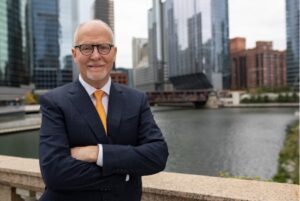 Paul Vallas formerly ran the public school systems in Chicago, Philadelphia and the Louisiana Recovery School District. He was a candidate for Mayor of Chicago.
Footnotes & Citations
- CPS Budget & SCS Expansion: Chicago Public Schools FY2025/FY2026 Budget Documents; CPS Board of Education Announcements on SCS Expansion.
- Program Origin & Funding Structure: 2015-2019 & 2019-2024 Collective Bargaining Agreements between the Board of Education of the City of Chicago and the Chicago Teachers Union (CTU).
- Academic & Proficiency Data: Illinois State Board of Education (ISBE) School Report Card Data (Richards Career Academy High School Academic Performance Metrics).
- Per-Pupil Spending Comparisons: CPS District Financial Reports; Civic Federation Analysis of CPS Spending Patterns across Magnet, Charter, and Traditional Schools.
- Vendor Contracts: City of Chicago & CPS Vendor Contract Database (Kenwood Oakland Community Organization contract allocations).
- Charter & Magnet School Funding Disparities: Illinois Network of Charter Schools (INCS) Financial Analysis; CPS Department of Finance Allocations.
- Public Statements & Quotes: Public Proceedings of the Chicago Board of Education; Press Statements by Mayor Brandon Johnson and Board Member Ellen Rosenfeld.
- CPS Internal Audit: Chicago Public Schools Office of Internal Audit, Performance Audit of Sustainable Community Schools Initiative.
- Urban District Comparisons & New Orleans Data: Louisiana Department of Education School Performance Scores; Cowen Institute for Public Education Initiatives at Tulane University Reports on New Orleans Public School Funding.
- Public Opinion Data: Illinois Policy Institute / M3 Strategies Survey on Chicago Voter Attitudes Toward the Chicago Teachers Union.
Comments 17
Paul,
What a tragedy. These kids and their parents are locked into the “progressive” vicious cycle of poor neighborhoods, poor schools, leftist teachers, along with lack of opportunity due to their “education!” Some wake up and escape, but I fear too many will remain rooted in the same poverty and crime ridden neighborhoods that continue to fester for lack of leadership from the mayor or the governor.
The legacy of the antebellum slave codes lives. Now the leftist CTU can just pretend to deliver literacy.
Why not just streamline the whole process of CPS education that is controlled by the CTU? Why waste all OUR money on a system that doesn’t work. The solution that will satisfy the CTU seems obvious to me; any baby born in Chicago should automatically have a graduation diploma tossed into the bassinet at birth. If necessary hire a CTU teacher to toss the diploma in. Of course union seniority rules will apply!
Well Well, what a surprise. The new CTU approved program funds community groups freely with of course no qualification nor accountability beyond being on CTU’s buddy list. With no accountability no way to tell what is being delivered, and what is the benefit. Fits CTU model exactly. I wonder how many “meetings” with $ Lunch or $$dinners, or $$$ seminars in interesting places with of course no meaningful outcomes from the cost as well. Just give us MORE money to spend on stuff that sounds good. Wasting taxpayer money seems to be CTU game plan. As your last campaign for mayor shows, voter apathy — as Pogo famously said, “We have met the enemy and he is us”. This also holds true for other elective offices, especially on the federal level. A particular group of non-assimilating people will vote actively and as a block, to our own detriment. At least our brethren north of the state line exhibited some common sense and did not vote for an avowed DSA Ms Hong. Maybe there is a glimmer of awakening to what is happening in our country.
Spending on ‘services’ rarely raises test scores, regular testing with good tests usually does – in time. New Jersey [currently #1 on some lists and an expensive state] spends around 20K+ per student. We test every year, 2xs in key grades, and those scores are closely evaluated. Unfortunately, CPS have dropped so low, it will take longer than one elected official’s term of off to show real results. Hence no reward for any real effort for some time.
The CTU does things. Things that accomplish union power objectives but fail our community’s struggling children.
I see one of the 2 ways of correcting the Chicago School system: 1) Reintroduce caning in the class and introduce flagalation (sp) for the under performing teachers and the head of CTU and 2) cut the bacon to those meat heads. i.e, stop the SNAP tickets to those kids that don’t care to study and also the free lunch at school.
What I am trying to say is: you have to get them where it hurts!
-Nambi
Paul, as usual, you’re absolutely correct. However, as long as the minority community and their North Shore elites vote the same people again and again, those communities have no hope.
And this is sustainable as long as the Democrats are owned lock, stock, and barrel by the teachers unions.
You should run again, Mr. Vallas. There might be several sources right here in the JKN circle who would help you make your flawless critique of Chicago’s union education and related scams more crisply communicated and hard-hitting.
The CTU Incompetent Panic Administration is ripe for a takedown. Chicago’s citizen victims need the takedown delivered in neighborhood tavern style. And a few appropriate wisecracks could help.
With a dozen candidates announced for the primary already, Mayor Pinhead is very confident he will win the primary with the backing of CTU block vote alone plus the majority of black votes. He is just waiting until the last date for filing and or the CTU and his voting block come to him begging for his candidacy.
And Mr. Vallas will be better off running as a Republican if he hopes to be the next mayor and it’s possible.
-nambi
The Great CTU Ponzi scheme – the ones on top benefit the most while the ones on the bottom are left empty handed
Looking at the replies it is apparent that schools are a very sensitive topic. Here are questions that have been on the mind of many but never answered. Why do people without school age children pay taxes for schools? Why do retirees pay taxes for schools? Why must schools be supported forcefully through taxation? Perhaps a neighborhood advocacy group needs to express these sentiments.
Exactly! Why?
ANYthing to do with the CTU is a scam for anyone or anything except the CTU.
Paul Vallas can never be elected. CTU is deadly scared of what he can do. CTU will do everything and anything in their power to defeat him. He can’t win.
“As a Black man, I don’t want to fire Black people”. Brandon Johnson.
CTU is to Chicago mayoral election as AIPAC to the US Congress.
Our politicians are all political whores.
Trump makes the Biden Crime Family look like amateurs.
Zohran Mamdani has delivered more for NYC resident in 6 months than Johnson has in 3 years.
CPS is essentially a day care and a jobs program for illiterates. Aside from the few elite schools, 3/4 of their schools have a dreadful number of children reading at grade level.
We all pay for schools because it is an investment in society, but students in a school where 3/4 of the children are not proficient in Reading for math should be able to get a voucher to go to a different school.
Republicans don’t hire illegal aliens and benefit from illegal immigration. That’s a Democrat hoax!
Very good points from Mr. Maitino! But I beg to differ on Trump. He doesn’t beg from foreign governments like Ukraine as the Bidens and Pelosi’s did.
Yes, we all pay thousands for schools as an investment in the society although our kids graduated and gone decades ago. But it’s sad that we are considered a burden to the society that we keep helping!
-Nambi