


Chicago Media Fuel Anti-Police Hysteria
By Paul Vallas
April 24th, 2026
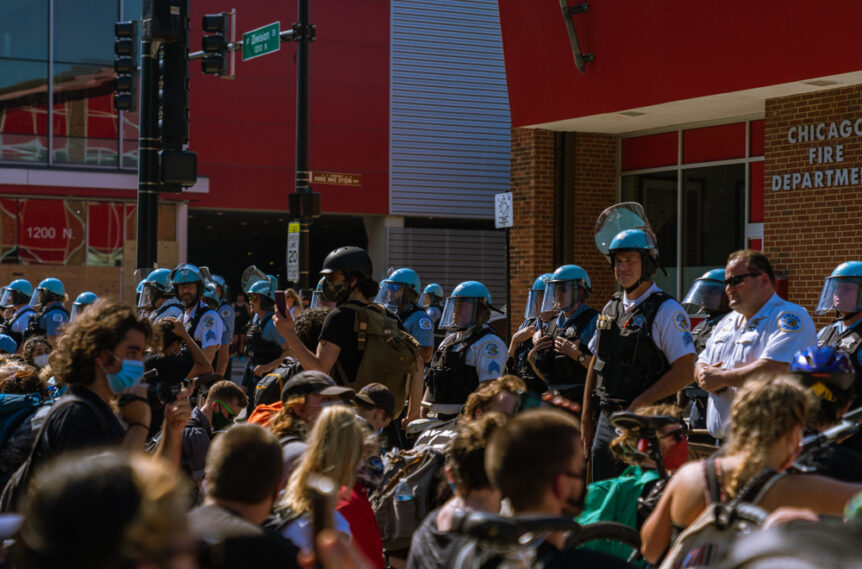
Chicago’s media outlets are amplifying a dangerous narrative that paints the Chicago Police Department (CPD) as racist and unreformable, eroding public trust and hamstringing officers who protect our streets. This isn’t journalism—its activism disguised as reporting. Criminals are increasingly treated as victims and cops as villains by so called police reformers and advocates and criminal trial lawyers with media cheerleading the distortion. Facts be damned: the story line is that CPD is biased against Black residents, and allergic to change. It’s time to set the record straight.
# Police Shootings: Context WTTW Won’t Touch
Consider WTTW’s June 16 story, later updated, which emphasized that Chicago police shootings in 2024 — then at 16 — had already surpassed the 12 reported the previous year. What the story deliberately ignored is that even at 16, the total was far below averages from the previous decade. The 22 actual police shootings the city finished in 2025 was half to a third the annual number shootings experienced a decade ago.
Absent from WTTW’s reporting was any real attention to the surge in police officers being fired upon by criminal offenders. Superintendent of Police Larry Snelling reported that from 2020–2024, CPD officers were targeted by gunfire more than 330 times, resulting in 38 wounded and 7 killed — over four times the annual average of the previous decade. Dramatically fewer police shootings at a time of dramatically higher levels of armed assault against officers is not evidence of police abuse. It is evidence of restraint.
# Black Overrepresentation? Crime Rates Tell the Real Story
Chicago media’s obsession with tarnishing CPD is not limited to traffic stops or police shootings. The media’s coverage of fatal police shootings is also distorted and tends to frame disparity without context. Frequently, coverage of fatal CPD shootings claims that Black residents are overrepresented among police shooting victims but rarely acknowledges that the rate of violent crime arrests among Black residents is over 20 times higher than that of White residents.
South, Southeast, and West Side neighborhoods—overwhelmingly Black and Latino—saw murder rates 12-18 times the city average in 2023. More cops there means more encounters; it’s math, not malice. Yet media peddles raw ratios to stoke outrage, stripping context that high-crime zones demand heavy patrols. Police aren’t hunting Black residents or Latino residents-they’re responding to 95% of murders and 97% of felony gun arrests occurring in those communities. By ignoring this the media effectively green light’s the rhetoric of police critics.
# Excessive Force: Complaints Don’t Equal Guilt
The WTTW headline was damning: “Excessive Force Allegations Against CPD Officers Rose 46% Since 2022: Data.” How can it be that, after years of efforts to improve the city’s police department, there is still so much excessive force being deployed? WTTW’s report did not explore how many of those complaints were ultimately found to be valid. In fact, the outlet does not appear to have requested that data before filing its story.
An analysis by CWB Chicago concluded that the numbers look quite different once you filter for complaints that actually held up under scrutiny. The worst year for bona fide excessive force complaints in WTTW’s dataset was 2022, and even then, the Civilian Office of Police Accountability sustained just 15 percent of cases. CWB reported that last year COPA sustained only 4 percent of excessive force complaints, a total of 30 cases. In 2024, COPA has sustained 64 — 7 percent.
Ignored in the story is that the surge in complaints may be arising from the SAFE-T Act, which allows for anonymous complaints against police officers in the state. COPA has also dramatically expanded its presence at community events, spreading the word about what it does and how individuals can file anonymous complaints. Such community events ballooned from 110 in 2022 to 358 in 2024.
# Traffic Stops: Disparities Driven by Crime, Not Bias
WBEZ recently ran a headline suggesting that, despite a 45 percent reduction in Chicago traffic stops in 2024, “racial disparities” still exist, as Black and Latino drivers accounted for nearly 75 percent of all traffic stops. No significance is given to the fact that 57 percent of all non-moving violations involve Black and Latino drivers, which closely matches their 58 percent share of the city’s population. Non-moving violations are stops not tied to the act of driving, occurring when the vehicle is stationary or involves its condition.
Even more telling, there is no reference to Black and Latino residents accounting for nearly 95 percent of Chicago’s murder victims and 97 percent of felony gun possession arrests, suggesting a reason for the heavier police presence — and thus more stops — in Black and Latino communities. Traffic stops are among the most effective tools police have for intercepting illegal firearms in high-crime neighborhoods where shootings are concentrated.
Stops are CPD’s top gun-interdiction tool: 25 percent of 2023 firearm recoveries came from them. In high-crime zones, that’s lifesaving work. The irony? Whites at 32 percent of the population are stopped at rates far exceeding their 3-5 percent share of violent crime arrests. In this context, the real disparity may be in the number of White residents being stopped than their share of serious criminal involvement would warrant.
# The Consent Decree: A Boondoggle Masquerading as Reform
The 2019 consent decree—236 pages, 503 mandates—was political theater after Laquan McDonald’s 2014 shooting. Mayor Rahm Emanuel needed a diversion from his coverup of the Laquan McDonald shooting, birthing the expensive police monitoring empire. Today, compliance consultants outnumber the full-time police officers assigned to the CTA. The Consent Decree has cost the city over $200 million since 2019, with no end in sight.
It’s reform theater: enriching outsiders while CPD chases paperwork instead of criminals. Police shootings have dropped by 70% since before the Consent Decree despite the dramatic increase in attacks on police coincidently since the decree went into effect. Media routinely promotes the decrees importance by sighting CPD’s low compliance the decree’s plethora of mandates every time there’s a police controversy or a city financial settlement for alleged police misconduct, as if that is the reason.
# Ignoring The Wrongful Convictions Racket
In nearly every major settlement for wrongful conviction or police misconduct, failure to implement the Consent Decree is cited as justification for multimillion-dollar payouts. Rarely do reporter’s question whether individuals receiving these settlements were actually innocent or why the settlements are so large. Since 2000, Chicago has paid out over $700 million in police misconduct lawsuits, not because claimants were proven innocent but due to alleged police misconduct.
The media ignored Kim Foxx’s brokering of deals with a secretive “Lawyers Committee” composed of private attorneys specializing in lawsuits against the police. These lawyers, sometimes hired as “Special Assistant State’s Attorneys,” worked to overturn murder convictions, often not because of new exculpatory evidence but due to allegations of police misconduct. Foxx’s “Conviction Integrity Unit” issued “Certificates of Innocence” even when there was no evidence to support actual innocence, paving the way for successful lawsuits against the city.
After eight years of Foxx having her thumb on the scales of justice, Chicago has seen half the nation’s overturned convictions and wrongful conviction lawsuits filed. By the time she left office in December 2024, Foxx left as many as 275 wrongful conviction cases for which lawsuits have been or will be filed, seeking millions more in damages. These new suits could cost the city $ 1 billion. No one in the media ever seems to question whether these individuals were innocent of the crimes.
# Clearance Rates: Reform’s Cruel Irony
For all the media’s negative or contorted coverage of CPD, here lies the great irony: In one breath, media reports accuse CPD of disproportionately targeting Black residents; in the next, they criticize CPD’s lower clearance rates in solving murders in Black neighborhoods — as if both claims can be true simultaneously. The reality is that years of criminal justice “reforms” have undermined police capacity to deliver justice.
Staffing shortages mean half of 911 priority calls go unanswered, the elimination of ShotSpotter has slowed response times to shootings, and restrictions on vehicular and foot chases allow violent criminals to escape. Even before the SAFE-T Act, pretrial release policies returned over 70 percent of violent offenders to the streets pending trial. With insufficient detectives and witnesses unwilling to testify under threat of retaliation, it is hardly surprising that clearance rates are low.
# Who profits from anti-police narratives
The real beneficiaries of this endless cycle are not Chicago’s neighborhoods but the growing “criminal industrial complex” of lawyers, consultants, and monitors who profit from lawsuits, reform studies, and consent decree contracts. Their influence depends on perpetuating the narrative that police cannot be trusted, regardless of crime rates or police actions.
Meanwhile, as this chain of events unfolds, vital city resources are drained from programs that could address violence, and police officers remain hamstrung by rules and scrutiny that make it harder to keep streets safe. The ultimate victims of this dynamic are overwhelmingly Black and Latino residents of Chicago’s poorest communities, who suffer under the daily weight of shootings, homicides and the fear of the return of violent criminals under pretrial release.
Chicago cannot afford a biased media landscape that turns its back on facts in pursuit of narratives. The city needs stronger, fairer journalism — and a justice system that prioritizes public safety over politics and profit. Demand facts and objectivity from the media who in turn should demand accountability from a justice system in which protecting and advocating for criminals has become an extremely profitable enterprise.
-30-
 Paul Vallas formerly ran the public school systems in Chicago, Philadelphia and the Louisiana Recovery School District. He was a candidate for Mayor of Chicago.
Comments 29
“it’s math, not malice”.—well said Paul I agree, the media is anti-police, the Sun-Times and Tribune are totally Commie, and so is our TV News. Looking forward to having you as our guest on Hibernian Radio soon, where we promote and celebrate our Irish First Responders- cops, firefighters, paramedics, and nurses. We’ve said it for years, “We’re not White, we’re Irish!”
Thanks pal.
Houli
How in God’s holy name did the city not elect this man into office? Are there not enough common sense citizens to overcome the CTU? Wake up Chicago
Simple. The heavy majority of the 13.2% will ALWAYS pull the lever for B.J. and his ilk now matter how much harm comes to them.
We didn’t elect him for the same reason the police are demonized and our justice system is failing — a refusal to report facts instead of opinion. Nobody uses facts in reporting. The only fact is often literally what someone said, not whether it is true. All people know is what they are told. They have no way to find facts themselves. So they vote and act on the flawed and biased information they are given. One party government is a form of corruption, but it will never be uncovered by a media that has joined the party.
Thank you, Mr. Vallas!
We can only hope that you decide to run again, win, and course-correct. The racial hustlers and progressive activists have nearly succeeded in turning Chicago into a blue wasteland.
CPD should print T-shirts with “It’s Math not Malice”.
“nearly?”
I read this after the guest column by Mr. Vallas. Very timely.
https://michaelsmith.substack.com/p/the-oppressed-the-oppressor-and-the
The Tribune is led by a groups of biased anti-police progressives led by Gregg Royal Pratt and the Tribune Guild.
If you want REAL news about the CPD real CWBChicago or Second City Cop.
And the Trib has a British theater critic and academic running its editorial page. The Trib is nothing if not consistent in its biases.
I was going to urge Paul Vallas to submit this excellent column to the Trib to run as an Op-Ed piece. After thinking about it, the column would probably be DOA in the Tribune’s Star Chamber.
The media has stopped reporting in favor of hysteria… guess it sells better. Paul Vallas for Mayor!
Regretfully, Paul will never win by speaking the truth. Those that do lose, pure and simple. We live in a ‘it’s somebody else’s fault, not mine’ society.
Plus CTU hates Vallas. They made sure he didn’t.
Great column. This is why I’m happy WTTW no longer receives government funding. They are as biased as CBS, ABC, NBC, and CNN.
Great column as usual! Thank you, Mr. Vallas, for the extremely enlightening, yet maddening facts. Hope you decide to run again.
They tied the police hands, emptied the jails, allowed a massive influx of poor immigrants and homeless, then call them racists when they do their jobs. The police have a history of abusing people in the past, but the force now is almost half female and minority, even in command positions.
Chief is black, Mayor, County Board president, AG, at least a third of the Aldermen, a few members of Congress, they have been in power for a long time now. They wear the jacket for all of this. They look down on the poor, and most importantly, anyone who works hard, has their taxes and puts their trust in government to provide clean, safe streets.
Why people vote for any Chicago Dem is beyond me.
Paul, I’m interested in your thoughts on the crooked dysfunction of politics in general, and how the nefarious sort are able to either outright buy office, or leverage fear, race, and lies to gain office. It seems that’s how you win. You issued many detailed policy papers and laid out plans for reform. They went with the race hustlers instead.
As Jefferson is credited as saying, “People get the government they deserve”. Maybe he was right.
I hope you get a chance to reform the city. I hope my belief in you is proven correct. We have to get the money out of politics as best we can and make these campaigns about ideas. You’ve got lots of great ideas. Are the people patient enough and smart enough to listen?
Right on, Paul. Reform theater for sure.
Thank you, Mr. Vallas. This article reinforces why I’ve been a fan of yours for so long – going back to your run for governor against Mr. Blagojevich. (I even took a Democratic ballot that primary to give you a vote. Another loss for the “great state of Illinois.”)
Thank you Paul for your concise reasoning regarding the CPD.
The Chicago media WGN, NBC, ABC, CBS, and WTTW are so leftist woke organizations that don’t report factual news with supporting evidence of fact. They don’t investigate or even follow up objectively the narrative is always anti police and anti law and order. It’s always the victims being in the wrong place at the wrong times.
I gave up on WTTW news long ago due to obvious bias.
Paul,
Thanks for the civics lesson, but I fear it’s lost on most of Chicago’s residents that were asleep at the wheel and voted for another community organizeer for mayor, an empty suit, and never had a job! As we continue to admonish “elections have consequences,” and the constituency that elected this inept and empty headed mayor, are to blame. They swallowed the hype of electing a black man instead of a white, talented and experienced leader like yourself. But hey, they got what they deserved, but now are suffering the ill effects of buyers’ remorse. Between governor dumbo and mayor pannix, I have serious doubts as to whether the city and state can recover from their mismanagment, as thousands that are able, flee. But hope springs eternal…..right? Xristos Anesti…
My take on politicians is: “They are all liars, thieves and whores.”
May take on the media is: “They are all liars, thieves and whores.”
The best move of my life was From Chicago in 1995. I have never regretted nor looked back on that move.
The Windy City is out of control…that’s what one party dominance can do…there is not a check or balance when it comes to city government.
In my life time, Chicago has gone from the The City of Broad Shoulders to the City That Works to this mess . I blame the CTU ,as corrupt and rapacious as any Cosa Nostra racket , with a woke media runnning a highly effective misinformation campaign The only ‘hope’ is that” If something cannot go on forever , it will stop “. The how and why and when of its stopping will be spectacular , but not pretty, but it will stop . The other question is , as bad as Johnson is , is there an even worse mayor , a Mamdani , to accelerate the decline waiting in the CTU’s pocket ?
Excellent column in John Kass News. Thanks Paul G. Vallas for exposing this absurd mythology corporate media has created. We are expected to cheer Pritkzer and his cronies for sneaking a Trojan Horse into their SAFE-T Act, which encourages scam artists and Jussie-types to file false complaints against police officers while hiding behind a cloak of anonymous fiction.
Illinois politicians knew they were opening flood-gates of invalid fabrications, but they’re happy to pay out $700 million in fraudulent misconduct lawsuits. That’s small change compared to other schemes they use to rally their extremist voters.
The upcoming May Day protests are similar. Exposing kids to riots could result in massive lawsuits against the city. But Chicago Public Schools are eager to gamble children’s safety by involving them in high-risk activities that create bloodshed year after year.
The 2017 May Day protests in Olympia, WA and Portland, OR turned violent, and 9 police officers were injured by rocks and bottles. In France six officers suffered severe burns from Molotov cocktails. Two years earlier downtown Seattle became a combat zone of broken windows, burning trash cans, assaults. injuries and arrests.
https://abc7chicago.com/post/chicago-board-education-meet-thursday-cps-parents-voice-may-day-concerns/18949132/
“it’s math, not malice”
Well researched and well said, and so true.
Great column Paul, thank you.
Chicago is toast, so are most big Democratic cities and states.
In the real world Paul should be mayor getting Chicago the help it needs to recover from the last two mayors both who are not even capable of running a hot dog stand.
As my Sainted mother would say
“ It’s in Gods Hands now”
Great article Paul.
You will not get fair and impartial journalism in Chicago or anywhere else in today’s climate. The 60’s radicals who “mostly peacefully” protested the Vietnam War on college campuses and brought you the “mostly peaceful” 1968 Democrat Convention in Grant Park, never left those campuses. They stayed and became the tenured professors, turning colleges and universities into leftist indoctrination camps rather than learning centers. The “journalism” schools were some of the hardest hit. Weather Underground terrorist Bill Ayers is receiving a taxpayer funded lifetime pension from the University of Illinois for his decades of grooming young minds into radical loons. I think it was Chicago Seven defendant Abby Hoffman who said “We will get you through your children!” And they did.
While alternative media options have lessened some of the death grip of bias of the so-called legacy media, we are a long way from any semblance of balance.
As Greg Gutfeld says, “You can’t hate the media enough.”
Few are willing to say it. However, we all know what the problem is, who the problem is.
Politicians and the presstocracy are savaged if they whisper, or even think, the truth.
Diversity is our strength.
Paul,
Your article is a modern-day version of “The Lord of the Flies,” highlighting the two groups that occupy the city – those that want reform and those that want turmoil. Turmoil seems to be winning.
Each election cycle, you would hope that the people of Chicago would vote for positive change but it’s obvious that the residents haven’t had enough otherwise you would be sitting in Daley Plaza.
The city will continue down the path of anarchy, and I don’t see any positive changes coming any time soon.
“Math not malice”… profound! Thank you Paul Vallas.