



The Holy Season of Lent: Shedding the Callousness of the Heart
by His Eminence Metropolitan Nathanael of Chicago
March 3, 2023
Every morning we ask ourselves, “What should I wear?” The choice we make may say something about us. We also might get a self-esteem boost from our clothing. At the very least, we know we’re protected from the elements.
Perhaps similar but more urgent question is: “How is my soul clothed?” Throughout Great Lent, the theme of spiritual vesture comes to the fore in hymns and Scripture readings.
In his monumental Great Canon of repentance, Saint Andrew of Crete invokes repeatedly the image of the “garments of skin” that clothed Adam and Eve after their banishment from Paradise (Genesis 3:21):
Sin has stripped me of the robe that God once wove for me, and it has sewed for me garments of skin. I am clothed with the raiment of shame as with fig leaves, in condemnation of my self-willed passions. I am clad in a garment that is defiled and shamefully bloodstained by a life of passion and self-indulgence
(Tuesday of the First Week).
Our soul’s garment is said to be bloodstained by the “murder” of our brothers and our sisters, the woeful consequence of “Ancestral Sin.” Whether through overt acts of violence, passive indifference to their plight, or simply in attitudes of anger, hard-heartedness, or hatred that Christ equates with murder (Matthew 5:21-23, 1 John 3:15). With each Baptism, Orthodox Christians chant, as we also shall at Pascha, “As many of you as have been baptized into Christ have been clothed in Christ” (Galatians 3:27). To be “clothed in Christ” means to take up His ways of gentleness, mercy, forbearance, and love. Donning these virtues says something about the wearer; they become definitive of him and her.
Hardened hearts and callous souls are effectively naked. They are most vulnerable to the harshness of the world, the antithesis of the new life in Christ. So says Saint Paul in his Epistle to the Colossians (3:12-14):
“Therefore, as God’s chosen people, holy and dearly loved, clothe yourselves with compassion, kindness, humility, gentleness, and patience. Bear with each other and forgive one another if any of you has a grievance against someone. Forgive as the Lord forgave you. And over all these virtues put on love, which binds them all together in perfect unity.”
Lent is an opportunity to shed the callousness of our hearts, the “garments of skins,” and to receive from the Bridegroom of our souls the radiant vesture of the coming Kingdom. This clothing is a gift from our merciful and loving God. However, we also need to prepare ourselves to receive this gift through prayer, fasting and almsgiving, along with seeking and granting forgiveness. Through these disciplines, we trade “a life of passion and self-indulgence” for Christ’s ways of purity and self-denial and sacrifice. In the Orthodox Christian Church, a hymn is chanted during the Lenten Pre-Sanctified Liturgy to remind us that self-denial has little value apart from love of neighbor: While fasting with the body, o brethren, let us also fast in spirit; let us loosen every connection with injustice… Let us give bread to the hungry and introduce into our house the poor who have no roof to cover them, that we may receive from Christ our God the great mercy.
The entirety of our Lenten journey is a program for bearing our hearts to and for others. We shed those dead garments of skins so that we can be clothed in the virtues of Christ. The goal of the season is not to make us more self-righteous and austere, but rather more tender-hearted and compassionate, with souls soft and open to one another, clothed in Christ and prepared to enter the Kingdom of God in childlike purity and humility.
During Lent—and every day thereafter—Christians and all people of good will are invited to begin each day by asking, “how is my soul clothed”? This is not as a superficial exercise in fashion, but rather as a reminder of the weightier matters of life, namely, justice, mercy, and faith. Such “garments” do not pin brother against brother or sister again sister; they help form an eternal condition, one that grants life to all and draws us closer to one another.
-30-
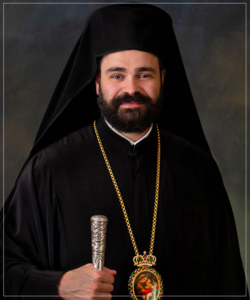 † Nathanael, Metropolitan of Chicago
Greek Orthodox Metropolis of Chicago
Metropolitan Nathanael’s Twitter: @MetNathanael
Metropolis Website: Chicago.goarch.org
Comments 11
Good of you to include this article. Timely message for all Orthodox Christians
Hope you’re doing better.
Steve Sarovich
Thankyou your Grace for this inspirational message, as we all thirst for God’s guidance in these turbulent times. Perhaps a good message to be read by all our parish priests on Sunday. We wish you kalo Pasxa, and Kali Anastasi.
Such timeless truths – beautifully written. The hard of hearts need to read and apply these truths.
Thank you your Eminence for a well written message! Timely and true.
John,
As all your columns are very prophetic certainly the one about Lent strikes home.
However can’t wait for your columns to follow on the run off election. (Go ! Paul Vallas!)
Praying for your full recovery . Chicago needs you!!!
Thank you for your inspiring words, Metropolitan Nathanael.
Thank you Your Eminence and you also John for these words. All Christians should be inspired with these words and the more they become read, the better our world can be….improvements in Faith, Family and Friends is and should always be the foundation for a greater humanity.
God bless you John and keep on keeping on.
Cory, what a great column! Like you, I’m a huge fan of Burt and Hal David’s body of work. For me, my favorite (aside from all the great blockbuster melodies from the Carpenters) is “This Guy” that Burt provided vocals on himself. It’s so reminiscent of classic 1960s pop hits that my dad used to sing. Plus, what guy cannot relate to “This guy’s in Love With You”?
https://www.youtube.com/watch?v=KIttclvXpYY
Hey John Kass – wasn’t Mayoral Candidate Paul Vallas once Greek Orthodox Christian? One would never know this by his campaign.
The above link has Paul Vallas going on Woke MSNBC with Lying Joe Scarborough and Rev (not) Al Sharpton to push the BLM woke narrative that Chicago’s brutal violent shooting and murder rates are the fault of disinvestment and police racism etc.
WT%?
Didn’t I personally tell you Mr. John Kass that we needed a tough law and order ex sports celebrity mayoral candidate like Doug Plank, Garry Fencik or Mike Singletary that wouldn’t pander to Woke, Lib Media, fake Rev race hustlers like Al Sharpton, BLM Antifa rioters, looters who are no way “Civil Rights” protesters.
Mr. John Kass have you followed this fake Christian Rev. Al Sharpton’s political and media career? He rose to prominence with the Tawana Brawley racial rape crime hoax and went on to hoax after hoax after hoax like Duke Lacrosse Team racial rape hoax, Saint (not) Trayvon Martin hate crime hoax, Ferguson MO Michael Brown racial hate crime hoax “Hands up don’t shoot” more like “Pants up don’t loot”, to dead by his own opioid drugs Saint (Not) George Floyd BLM riots.
I mean c’mon. Mr. John Kass – who’s Paul Vallas’ campaign manager. What is he, the Vallas team thinking?
mr ellis go to confession for bringing politics here
Amen.