



Good Books and Winter
by Marie T. Sullivan
January 8, 2025
For the first time in some years, I did not fly to Florida for Christmas.
I was never much of a Florida person anyway. I don’t golf, I don’t wear resort clothing, and to this day I am mildly unsettled when the tiny lizards on the sidewalk scurry inches from my bare-sandaled feet. (They are, after all, reptiles.) I sunburn easily. Yes, Florida’s weather is paradisiacal, but day after day of sunshine grows monotonous. Give me a good blizzard.
No, I did not visit Florida for the golf or the beaches, but to visit a nursing home where resided my dear mother, who passed away last year. She was 100 years old, though most of her life shunned exercise, ate what she pleased and enjoyed a nightly cocktail. She also had the best sense of humor of anyone I know, which aside from filial love made the purgatorial experience of flying to her worthwhile.
Achieving the age of 100 brought her small celebrity in the nursing home for one day: helium balloon attached to her wheelchair, gold “100” balloons on her door, a new hairdo, a party on the patio with an enormous cake. She was greatly loved; may she rest in peace.
So, this year I spent Christmas up north, savoring the moody weather. Old Man Winter smacked Chicago in the face late in December. After a balmy autumn, it was a shock. Yver, vous n’estes qu’un villain reads the poem by Charles D’Orleans (1394-1465). Winter, you are nothing but a rogue. . . you exude snow, wind, rain and hail; you ought to be exiled.
On the contrary. The cold of winter makes you feel alive.
The gloom can get to you, of course, but there’s an antidote: the reading of good books. Deep reading is transporting. It gets you out of your own head. Avoid Russian novels in winter, though. A friend who attended a fine university in his youth tells of one winter when he had serious winter blues. He went to Student Health and encountered a doctor who asked what courses he was taking. Russian literature was on the list. “I have told them not to schedule Russian Lit during winter quarter,” the doctor said. “I get lots of calls like yours.”
Just as we consume heavy stews in winter, some of us love old books, particularly the classics, in winter. They stick to your ribs. In 1944 C.S. Lewis wrote an essay titled On the Reading of Old Books, which he called a palliative “to keep the clean sea breeze of the centuries blowing through our minds.” He added these pearls of wisdom:
A new book is still on trial and the amateur is not in a position to judge it. It has to be tested…
It is a good rule, after reading a new book, never to allow yourself another new one till you have read an old one in between…
We may be sure that the blindness about which posterity will ask, “But how could they have thought that?”—lies where we have never suspected it. . . None of us can fully escape this [blindness], but we shall certainly increase it, and weaken our guard against it, if we read only modern books.
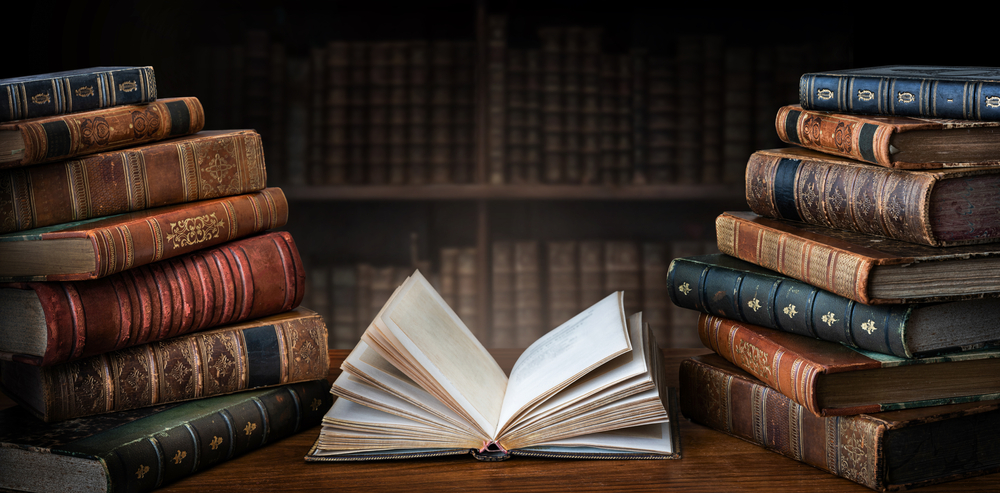
Old books please the senses, too: handsome typography, a certain smell, the heft of the spine, the touch of crisp yellowing pages that must be turned with care.
Another way to escape winter and the pressures of adulthood is to re-read books you read as a child. Doing so, you revisit your state of mind when you were, say, twelve, and then read the book with grownup eyes. In our household there were two favorites that I and my siblings read in our youth: Half Magic by Edward Eager and The Children of Noisy Village by Astrid Lindgren. I will continue to read them every five years until I die.
A great book for adults to re-read is A Christmas Carol by Charles Dickens. Never mind reading it at Christmas. Read it in July, when all that good-will-toward-men stuff has been thoroughly drilled out of you by traffic jams and phone calls to Comcast. It’s an excellent reminder, not too long, and a joy to read.
My mother loved to read but lost her eyesight late in life. She attempted books on tape but reported that, with rare exceptions, they did not engage her mind. So, we took to reading aloud to her ourselves, pausing here and there to invite her thoughts. We read the day’s news. We read books on politics and fashion, two of her favorite topics. We read biographies of political figures and Hollywood stars of her era. We knew what genuinely interested her. Such reading lifted her up and away from the nursing home. It did the same for us, and I treasure the memory.
Around that time, I stumbled on a book by Meghan Cox Gurdon titled The Enchanted Hour: The Miraculous Power of Reading Aloud in the Age of Distraction. Everyone knows it’s good to read to children, but the author extols the virtues of reading aloud to adults. A description of the book puts it well: “A miraculous alchemy occurs when one person reads to another, transforming the simple stuff of a book, a voice, and a bit of time into complex and powerful fuel for the heart, brain, and imagination.” Gurdon informs us that no less than Albert Einstein read aloud to his sister each night, following a stroke she had suffered. “Perhaps it was because of his almost superhuman intelligence that he was so sensitive to the plight of an active mind trapped in an earthbound body,” she writes. She also shares a worthy quote of Einstein’s from years earlier:
I believe that one of the strongest motives that leads men to art and science is escape from everyday life with its painful crudity and hopeless dreariness, from the fetters of one’s own ever shifting desires. . . this desire may be compared with the townsman’s irresistible longing to escape from his noisy, cramped surroundings into the silence of high mountains, where the eye ranges freely through the still, pure air and fondly traces out the restful contours apparently built for eternity.
So it is with deep reading, and to this day I thank the head of our high school’s fine English department, Mrs. Rose Barth, for making us read books we did not choose. She was brilliant, and tough. You didn’t cross Mrs. Barth, and woe befell any student caught with a copy of Cliff’s Notes. Mrs. Barth imparted this lesson: always be reading something good. Always be chipping away at a good piece of literature, even if you have time only for a couple of pages a day.
It needn’t be a tome. Short stories and essays can pack a wallop.
There’s a miniature volume I tuck into my coat pocket when heading for a long line at the post office, or a long wait at the dentist. You know it: The Elements of Style, by William Strunk, Jr. and E.B. White. You can dip into it for a moment and extract a useful language tip, or simply read the short introduction to savor its enduring wisdom. The disembodied examples alone are a pleasure to read, and I jump to them as I jump to the cartoons in the New Yorker. These on punctuation:
Well, Susan, this is a fine mess you are in.
Again and again he called out. No reply.
The situation is perilous, but if we are prepared to act promptly, there is still one chance of escape.
E.B. White later wrote: “The Strunk book, which is a ‘right and wrong’ book, arrived on the scene at a time when a wave of reaction was setting in against the permissive school of rhetoric, the Anything Goes School. . . Unless someone is willing to entertain notions of superiority, the English language disintegrates, just as a home disintegrates unless someone in the family sets standards of good taste, good conduct, and simple justice.”
The little book is a gem. Recall the words of Thomas Paine: “These are the times that try men’s souls.” Following are alternate wordings that knock the stuffing out of that utterance, according to Strunk & White:
Times like these try men’s souls.
How trying it is to live in these times!
These are trying times for men’s souls.
Ah, beautiful winter. A trying time for many, made pleasant by the reading of good books.
-30-
An Ohio native, Marie T. (Terry) Sullivan has lived in Chicagoland for all of her adult life. Her background is in music. By day she works for a Chicago nonprofit. For two years she was culture editor for the now defunct Chicago Daily Observer.
Comments 25
Bravo, Terry Sullivan!
Wow, I love the things you say here. I never read fiction. But I accidentally came upon some fiction by Cormac McCarthy. I read three or four of his books in a row. I could go to Amazon and see similar writing but maybe it’s better to find stuff accidentally. I like what you say about “The Elements of Style”.
Thank you
I wasn’t introduced to The Elements of Style, by William Strunk, Jr. and E.B. White until I was 30, 30 years ago. A coworker, Russ Cusimano recommended it.
I have a book that’s been sitting on my nightstand for 2 years. The Wonderful Story of Henry Sugar by Roald Dahl. I think it might be time to read it. Again.
A lovely read to start the day! I just started rereading Thomas Mann’s “Doctor Faustus”, which I first read in high school. “The Elements of Style” is an invaluable gem that should always be fresh in one’s mind.
A nice start to my day here and thank you. I do love the cold and snow of winter but as I age it’s sometimes tough to endure. Reading a good book or periodical is a great way to pass the time as I stay warm.
There are several movies which I watch every year, “The Natural” for example, on a cold night. The gorgeous cinematography by Caleb Deschanel and the elegiac music of Randy Newman are pure art, and who doesn’t find a baseball movie warming on a cold winter night?
I make a habit of rereading favorite books every year or so. To Kill a Mockingbird, where every sentence is poetic and the character of Atticus Finch so inspiring. The Heart of Darkness always makes me reflect on morality. Those are just two. My bookshelves are full of dogeared favorites.
Excellent. Write more please.
I loved your idea of old books in winter. I just finished The Young Lions by Irwin Shaw, a long-forgotten World War Two novel. It is one of those books that is so good that I am at loose ends for a few days trying to decide what to read next.
a book I’d stolen as a boy: Odysseus the Wanderer , the translation by Aubrey de Selincourt. Yes, I accept the consequence of my win. It turned me into a writer
not “win.” but “sin.”
My mistake. It should have read: “Yes, I accept the consequence of my sin. It turned me into a writer.”
JK glad you did. Great column, brought back fond memories from a simpler time in my life.
Great letter! This one is worth a few “re-reads”. Being a bit younger than perhaps others on this board, I’ve been sucked into my phone at night – and bored out of my mind. Thank you! New Book – Old Book. Miranda Divine’s “The Big Guy” and Clifford Dowdy’s “The Land they Fought for” should pair very well.
Ask an Inuit what they think of Seasonal Affective Disorder and they will look at you like you have lost your mind. Get outside, exercise and enjoy. Trees feast in the summer, so they can grow in the winter.
Reading The Big Guy at this time. Excellent book.
Mann, your admonishment to folks to get outside is spot-on. Many of us are nature starved and so are distanced from reality. See https://johnkassnews.com/nature-starved/
On pairing books: A librarian once pointed out to me the value of reading several contrasting books at once, so you can go with your “reading mood,” as she put it, in any given moment.
Suggest you take the phone and toss it into a pile of snow. Well, not really, but you get my drift (joke).
Mann, your admonishment to folks to get outside is spot-on. Many of us are nature starved and so are distanced from reality. See https://johnkassnews.com/nature-starved/
On pairing books: A librarian once pointed out to me the value of reading several contrasting books at once, so you can go with your “reading mood,” as she put it, in any given moment.
Suggest you take the phone and toss it into a pile of snow. Well, not really, but you get my drift (joke).
” There is no friend as loyal as a book”
-Hemingway
And an old dog!
Thank you for this amazing, well written, look into some personal parts of your life. I am sorry for the loss of your mom. We share that but mine died when I was 9 and she was only 36. I am 53 now and can’t believe everything she missed. Anyway – I appreciate your writing so much Mr. Kass!
Look into Confronting the Presidents by Bill O’Reilly.
Loved your offering for us today. Well done. Made me think of some of my favorites…..an avid reader as a young person; memories of “Seventeenth Summer” by Maureen Daly. Said to be one of the first of the genre written for older teen girls. Loved the story.
For a winter’s fascination, the chance to pursue the catalog of a particular author, coming to understand their own personal story – learning the whole “from whence has this come” part of their life and their inner sources. Such an author is Taylor Caldwell, a prolific author. Two of her very best (in my ever not-very-humble opinion!) are “Dear and Glorious Physician”, the story of St. Luke” and “Great Lion of God”, telling the story of St. Paul. Both are works of fiction, but when one reads of Caldwell’s background and from whence she draws her inspiration and her knowledge of those times, those and other of her books take on a whole different ability to engross the reader. Her story is captured in the Jess Stern book “The Search for a Soul: Taylor Caldwell’s Pyschic Lives”. Stern’s factual account of his interaction with Caldwell, trying to capture some inkling of where her knowledge and her insights came from, is totally engrossing. These all books that sweep you off into another time, leaving you with a wish to know and understand more.
Happy New Year, everyone. I’m off to get a replacement bulb for my favorite reading light, which just burned out!
Ms. Sullivan, we are kindred spirits! It is wonderful to find someone from the Chicago area who likes cold & winter, loves snow, doesn’t care for Florida weather and loves to read books from the past.
I get tired of hearing friends and family say that they hate winter and hate snow. I, like you, find the cold weather invigorating and I love to be out in the snow. When it snows, it does turn the gray day into a winter wonderland.
I, too, like to read books from my childhood years. I was crazy about dogs & horses and two of my favorite books were Lad A Dog, by Albert Payson Terhune & Black Beauty by Anna Sewell. I have both in hardcovers.
It is refreshing to know that there are people out there who love reading old books and enjoy a good blizzard! Thank you! 💕
On this frigid night in the Midwest, it warms my heart to see comments here from people who read BOOKS. Those who predict the demise of the book are cheerfully to be ignored.
I am now heading out into the snow to make my way home and put my nose in a book. . .
What a coincidence! 55 years ago a good friend who worked with me in a country club gave me her book, Five Smooth Stones, to read while she went away with her family for a short vacation. I used to be a voracious reader before I came to this country, mainly philosophical and romantical like Pride and Prejudice, Emma by Jane Austen, to name a few. Even after reading my friend’s book I was hanging on to the book for several years, reading few lines here and there and paragraphs that I marked for rereading. Later I donated the book to the local library and never seen it again. However, first thing this morning, I woke up remembering my friend (whose birth day was today) and the book she gave me. So, I ordered a copy of the book and later upon reading this article I ordered the book by Thomas Paine. Just now I finished reading the books on Biden and his son – Lap Top from Hell and How a president and his son sold America, and I will have 2 more books I ordered today for rest of the winter!
Terry, I so enjoy John Kass’ columns (yet rarely comment) but this reflection by you is extraordinary. Thank you for taking the time to share it with all of us and include some great reading ideas. I love the idea of re-reading books from our youth. All the best in 2025!
…and I am so sorry to hear of your mom’s passing. My dad is in his 90s and I’m embarrassed to say that it never occurred to me to read out loud to him! I, like your mom, find my mind wanders when I “listen” to a book. Thank you again for a lovely post.