



Chicago Public Schools Teacher Defends Scholarship Program for Needy K-12 Minority Kids Targeted for Extinction by Progressive Democrats
By Froylan Jimenez
May 17, 2023
All students deserve a competent and loving teacher, all schools need the proper materials and personnel to offer a quality education and all parents should be awarded the opportunity to make the educational choice that is best for their children. In that respect, I strongly support Illinois’ “Invest in Kids” need-based scholarship program and encourage parents, educators and elected officials to do the same.
As a 16-year public school teacher and coach, I have experienced the structural challenges as well as the satisfaction of educating at Chicago Public Schools. I have seen firsthand how students are lacking school resources in many ways and how teachers and parents alike wish more was done to help these students. I have also seen the resiliency, and gravitas CPS students provide in overcoming systematic disadvantages. I believe in public education and won’t hesitate to once again participate in strikes in order to safeguard what is in the best interest for public school students and their families.
Similarly, I am willing to publicly demand the rights of low-income families who choose to send their children to parochial schools, charter schools or home school. These students and their families also merit attention and the same concerns and fairness in schooling apply.
In short, education should not be a zero-sum game where some students get more and some less, or where school funding is lopsided in favor of some schools and underfunding others. It is absolutely possible to invest in all our students regardless of what school they attend. Basing funding decisions on student need is certainly one way to achieve this attainable goal.
This is the case with the “Invest in Kids” program where the State of Illinois offers tuition scholarships to low-income families that are below a given percentage ranging between 185% to 400% below the Federal Poverty line. Parents in these high need areas experiencing low graduation and low test scores can then choose to use the scholarships to send their kids to schools that best fit their child’s needs. Qualifying students must attend a school that is recognized and monitored by the Illinois State Board of Education. Both individuals or businesses can donate to the Invest in Kids program and receive a tax credit while making it possible for more low-income students with the most need to attend the school of their choice. Individual donors may designate their donation to go to a specific school in their community but not to a specific student. Annual reports on the scholarship recipients, the contributions, participating schools are mandatory and overall finance audit on this program is required.
Some may critique the Invest in Kids program as an educational program that helps private schools, hurts public schools and fuels funding inequalities. This could not be further from the truth. The Invest in Kids program is supported by Governor J.B. Pritzker for many reasons but above all precisely because it advances the need of low-income families that are suffering the most when it comes to educational gaps and require as many alternatives as possible and solutions to help their children overcome their income disadvantages. Public education is funded by property taxes in Illinois and the disparity between various school districts is tremendously unfair. The funding system is in need of a substantial overhaul but until that day comes having a way for low-income families to offset their low-funded school district with need-based scholarships is definitely a step in the right direction. While I’m a public school teacher, I can see the benefit of offering choice and assistance to low-income families to help their kid’s education. Scholarships matter and there should be more access and more opportunities to all students based on a family’s economic situation and academic needs.
Furthermore, contrary to what some may claim, government funding is not exclusive to public education programs. Take for example the Head Start program, Federal Pell grant, the GI Bill which helps veterans pay for private or public school or training, and most notably the State of Illinois Monetary Award Program (MAP) grants which are also awarded based on a student’s financial need to pay for tuition and other post-secondary educational expenses. These MAP grants are approved for low-income students to be used at both public and private two-and four-year colleges and based on the Free Application for Federal Student Aid (FAFSA). After all, this is essentially the equity funding objective at any level of education, to get students with the most economic need to excel in their education.
Loan Forgiveness for college tuition is another need-based financial and educational topic. President Biden has pressed for loan forgiveness alternatives to leveling the playing field on our nation’s public and private education expenses. Illinois should follow the President’s lead in offering solutions and opportunities for all students.
The Invest in Kids program expires January 1, 2024. As a teacher that views education holistically and advocates for funding fairness based on need, I urge members of the Illinois General Assembly and our Governor to uphold and renew this essential program as a way to prove Illinois values equity in education and won’t let politics stand in the way of financial academic need.
-30-
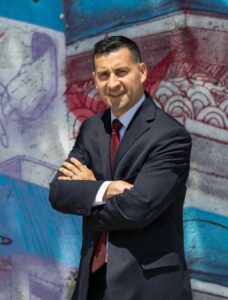 Froylan Jimenez is a Chicago Public School Civics Teacher and CTU union member. He is an elected Local School Council Advisory Board member that provides monthly input to the Chicago Board of Education.
Comments 21
Governor Jumbo supports Invest in Kids, until CTU and their puppet masters tell him not to do so. Expect the howling to increase over the summer. Progressives strangle any and every measure for equality and fairness in the cradle, or at any time up to and including natural birth.
Glad to read a reasoned opinion, Mr. Jimenez. My compliments, sir!
Liked today’s Stantis cartoon, with Johnson’s union labels. How does any voter (with a brain) vote in someone actually worse than Lightweight?
By eliminating 1/3 of the administration that money could go directly to tracer resources rather than paper pushers!
There are only two days left in legislative session. Contact your representatives and let them know you support the Invest In Kids act. Use this link https://p2a.co/OLJL4W2
This article jolted my memory and I remembered that Pres. Obama signed a bill cutting scholarships for poor kids in Washington DC resulting in 2 kids no longer able to attend his kids school Sidwell. Did a little searching and the author of the bill – our own Dick Durbin. With the talk in San Fran and Evanston about reparations – how about better education via school choice?
The dumb are easily led. The educated have to be forced. At gunpoint and firing squads. Maintaining a permanent underclass is the backbone of Marxism. The underclass serve the elites by working in the factories and farms so the elites can enjoy the fruits of their labor. This explains why Elite Bernie Sanders has reaped in millions all while praising the despot governments of Cuba, Nicaragua and Venezuela. Bernie lives well and wants to continue to live well. Most of our “socialist” millionaires do. It is best to keep the underclass uneducated to serve these elites like Sanders. Education can teach things like critical thinking which is not to be tolerated in Marxist societies. When Marxists seize power the first thing they do is round up the educated and either execute or imprison them in “reeducation camps”. Ironically these are usually the people that supported Marxists efforts to seize power. Don’t believe me? Research the histories of the Soviet Union, China and Cuba. The ascent of Marxists led to similar purges of the intellectuals in countries like Cambodia, Nicaragua and Venezuela when those democracies were toppled by the “socialists”. Most of the imprisoned never made it out if these “camps”. As Chicago is wrapping itself in the cloak of “Democratic Socialism”, a cleaned up sanitized term for “Marxism” we now see the crushing of any dissent in the name of further indoctrination of children. Mr. Jimenez is making statements that contradict the beliefs of his ruling party. I hope he is willing to defend them when his own come after him.
Fascinating and completely unhinged from reality rant Mr Diaz! Curious, do you have any thoughts on Illinois ’ “Invest in Kids” initiative, which, you know, is what this article is about??
I already did!
Enrique Diaz mentions the “crushing of dissent” in his comments and here comes Riga-Tony to crush dissent by calling Diaz “unhinged.”
Did you bother to read his incoherent rant about ‘marxism’, ‘prison camps’, and ‘firing squads’ as they SOMEHOW relate to Illinois “Invest in Kids!’ initiative? I stand by my comment, I’d be worried if I felt his rant made any sense..
‘Marxism’, ‘prison camps’, and ‘firing squads’ all start somewhere and they’re already germinating in the progressive Dem led Chicago & Illinois.
“I have seen firsthand how students are lacking school resources in many ways and how teachers and parents alike wish more was done to help these students. I have also seen the resiliency, and gravitas CPS students provide in overcoming systematic disadvantages.”
Aren’t CPS schools some of the best funded in the state? I really hate the implication that Chicago kids get short changed because of prejudice.
100% spot on, sir!
The “black and brown” people, really all poor folks in general, are trapped on the proverbial Democratic plantation, not that the Republicans really give a shit about them either.
They are trapped in lousy schools with low expectations and indifferent, feckless administrators.
There is lead in the water, and polluted air, lots of contaminated soil too.
The streets are unsafe, and criminally insane predators have more rights and autonomy than hard working families.
They house illegal immigrants in hotels and give them free health care while US citizens, even combat veterans suffer and live under bridges and in parks.
They use race and identity politics as a shield to cloak their incompetence and indifference.
Let’s be frank here, our entire government, our country for that matter has been taken over by greedy grifters who funnnel money to the connected.
Every “program, initiative, war, project” is a grift and much of the money is skimmed to the oligarchs and politically connected.
If we really cared about the kids, we’d make the streets safe, bring jobs in and let the families choose the schools for their kids. How can we condone these lousy schools where virtually no one is learning?
Instead of reporting the truth, the media runs interference for our lousy government and policies.
And most of the public are fools for rooting for the blue and red charlatans.
They don’t care about us, they care even less for the poor, and even less for the most vulnerable.
Where’s the messiah when we need him?
Great!!!
The black and brown citizens voted Brandon in as Mayor, now they mus5 live with him, at least for 4 years.
The “black and brown” people, really all poor folks in general, are trapped on the proverbial Democratic plantation, not that the Republicans really give a shit about them either.
They are trapped in lousy schools with low expectations and indifferent, feckless administrators.
There is lead in the water, and polluted air, lots of contaminated soil too.
The streets are unsafe, and criminally insane predators have more rights and autonomy than hard working families.
They house illegal immigrants in hotels and give them free health care while US citizens, even combat veterans suffer and live under bridges and in parks.
They use race and identity politics as a shield to cloak their incompetence and indifference.
Let’s be frank here, our entire government, our country for that matter has been taken over by greedy grifters who funnnel money to the connected.
Every “program, initiative, war, project” is a grift and much of the money is skimmed to the oligarchs and politically connected.
If we really cared about the kids, we’d make the streets safe, bring jobs in and let the families choose the schools for their kids. How can we condone these lousy schools where virtually no one is learning?
Instead of reporting the truth, the media runs interference for our lousy government and policies.
Yo Tee! It’s a beautiful sunny day on the rooftop deck of your imaginary skyscraper dere in Beloit! You really should get your imaginary private Cessna to visit Illinois and get some firsthand knowledge of da situation here! You think your inane opinions matter. You use a pseudonym to post your nonsensical drivel. In reality you are probably some anonymous intern at some vast nameless social media company barely making enough to pay your rent. You live an imaginary life with imaginary friends who listen to your mindless, vacuous nonsense. You are an idiot. No one wants you on this site and no one cares about your opinions. Now go back to your other troll sites where you catfish lonely, gullible men by posing as potential romantic interest. Activies such as these only reflect what a lowlife you truly are. This is why this is such an appropriate activity for someone like you. You are worse than what I would scrape from my shoes due to lazy dog owners. What I would scrape from my shoes describes you perfectly. I would tell you to go shut up and sit down but the ass kicking you just got means your fat ass is too sore. Oh well….
So, any thoughts about the “Invest in Kids” program? You know, what the article was a about? Too many multi syllable words for you? You can absolutely tell me to take a seat, but here’s the thing, I won’t.
1) Invest in Kids is a proven program to help low income families get educational benefits that their children might not have otherwise had. This is a great thing. I have donated to it and am a huge proponent. Keep it going.
2) Regarding resources, I believe I read that CPS currently spends ~$28K / student, which is quite rich and the $ / student continues to grow with continued flight of parents, of all colors, from Chicago while spending on schools increases. The $28K is also about double the cost of an excellent local north side Catholic school where we transferred our child. That private school tests much higher and has a much stronger community than the our “rich north side” neighborhood Agassiz/Tubman elementary school which consistently tested in the bottom 25-33% in reading & math, at least when CPS still published test scores pre-covid. $ per pupil continues to go up, even with inflation factored in, but the end product, our children, doesn’t improve. So money isn’t the problem, it’s the system and some bad apple teachers, such as someone just elected mayor, who fail students through the CPS system and don’t teach them how to succeed.
That is why I’m a proponent of school choice for all. Either let families have school choice in the Chicago community or continue to see them make a choice with their feet to leave for where they can get better schools in return for less taxes paid. Simple R.O.I. I suspect that most parents will make that decision for their children, that what they hold most dear to their hearts.
Sigh.
This personal story by Miss Jeminez is once again all true and also sad.
That’s pretty much the way it is will all JohnKassNews blogs and Wirepoints articles, especially those by ex Chicagoan Matt Rosenberg. Both John Kass and Matt Rosenberg have fled our Chicago City and publish “look how bad Chicago is” from their escape places.
Its just reality that our side lost pretty much everything in Chicago politics, crime prevention, crime punishment and education. The CTU, AFoT, the Woke, BLM “everything is racist if our students can’t read or do math” Educrats now have near monopoly control of schools in Chicago – even private/Catholic schools have to “submit” (that’s an ISLAM word) to CTU, Woke educrat certification.
It’s been said over and over since the 1980s by school choice free market types here at the U Chicago and elsewhere.
The Current CTU monopoly, teacher major certification monopoly system translates as:
Shakespeare Couldn’t teach English
Einstein Couldn’t teach math or science
Michael Jordan couldn’t teach physical education or coach basketball
But, we’re pretty much just wasting air, appealing to some responsible adults out there somewhere.
Who are these responsible adults?
Sleepy Joe, Senile Joe Biden?
Our new CTU Woke, BLM Mayor who only taught classroom school for 2 years and didn’t teach anything just passed all his students?
How about the monopoly mainstream news media of WaPost, NYTimes, CNN or even Fox after the Military Industrial Complex, AIPAC, ADL, Conservative Inc fired, purged Tucker Carlson – America’s #1 most popular, most trusted Cable news presenters?
Again, John Kass News and Wirepoints are pretty much spreading 100% (true) bad news, gloom and doom, all is lost like Denathor in Lord of the Rings staring in to that crystal ball where Sauron only shows him “you’re all doomed”.
Those of us left behind or who still care, need to start doing positive, solution oriented education, crime prevention, family formation, separation.
When was the last time any sane, educated person/institution started effective private schools in Chicago, Metro Chicago? I went to U Chicago Lab School (with that idiot Obama’s Sec of Education Arnie Duncan!), these elite Chicago private schools like Lab, Latin, Francis Parker (Harvard St. George Closed) have been around forever. So have the still functioning Catholic Schools like Mount Carmel, Mother McCauley. (Those Mother McCauley girls were certainly cute back in my day) .
Let’s face unpleasant realities.
We’ve lost all important Chicago , Crook County political offices to incompetent, racist, Lib Leftist, BLM, pro criminal forces – Mayor B Johnson, DA Kim Foxx, Cnty Board Chairwoman Toni P, I don’t know who’s the new CPD Chief I’m pretty sure what he or she will be.
When Zimbabwe elected Robert Mugabe and his cronies – what happened? What did people expect?
How about the sacks of Rome in the 5th Century AD? The conquest, sack, enslavement of Greek Constantinople in 1453. What did people like us do or think? Did they think it was all a misunderstanding? Think they could make it right by suggesting some free market, school choice reforms to the like of Atilla The Hun or Turkish Muslim Sultan Suleiman the Magnificent?
Don’t think so – these conquerors of once centers of Western Civilization had other things on their minds, as do our conquerors.
Please act and think in ways that recognize disturbing 2023 realities. Let’s start some new schools, start some new suburbs, some walled, gated communities in Chicago flight places like where John Kass lives in Indiana.
What do others think?
J Ryan
left Behind in Hyde Park Chicago
I’m against ANY program that is supported by Governor J.B. Pritzker and/or the CTU and its feckless members.